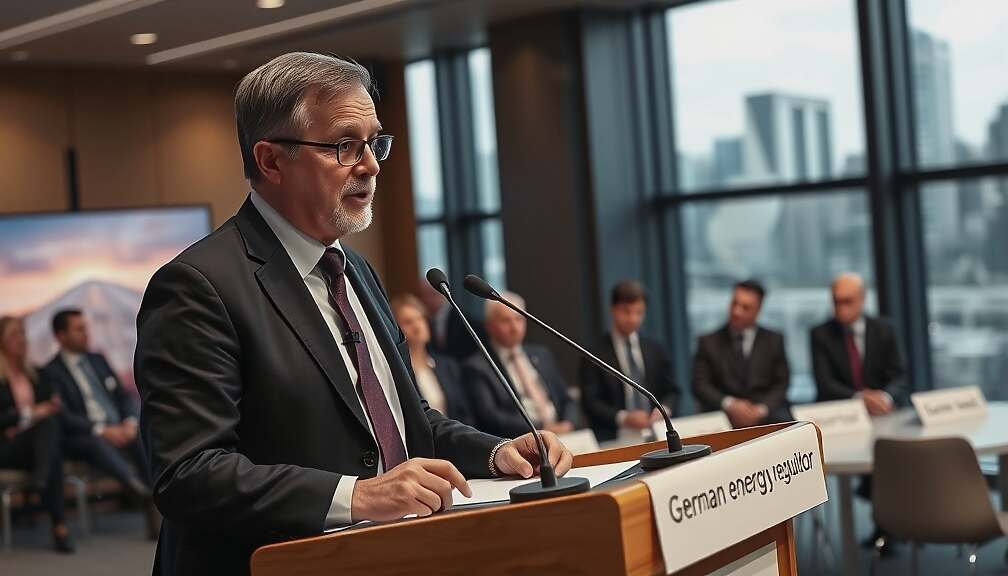
Klaus Müller, the president of Germany’s Bundesnetzagentur, denies that the country faces a gas shortage, even though storage levels are historically low. “There is no gas shortage because gas supply in Germany and Europe remains stable” he said on POLITICO’s Berlin Playbook Podcast.
Müller pointed out that, despite the low fill levels, traders and municipal utilities have ample means to bring gas into Germany. He cited Norway, the Netherlands, and Belgium as likely suppliers and mentioned unused liquid‑gas terminals on the North and Baltic Seas. He expects Germany’s storage to be very low by the end of the winter, and he warned that gas prices could rise in February and March as imports become necessary. However, for private households the impact should be muted because most have contracts that run for 12 or 24 months.
Looking ahead, Müller said that his agency actually anticipates lower future gas prices on the exchange during the autumn and winter of 2026 and into early 2027. Nevertheless, the winter of 2026/27 will be “the next challenge”. Private traders will need to secure sufficient new gas supplies, and there are two critical concerns: whether market signals indicate enough gas will be stored, and whether the sector is adequately prepared for exogenous shocks.
In this context, the possibility of a strategic gas reserve is under discussion. As a final example of an exogenous shock, Müller cited “anything related to terrorism” saying that this represents the greatest current risk to the gas supply.