Germany’s energy regulator, the Bundesnetzagentur, has declared the nation’s gas supply secure despite recent harsh weather conditions, a statement that subtly underscores ongoing vulnerabilities within the country’s energy infrastructure and geopolitical dependencies. While President Klaus Müller publicly affirmed a stable supply and guaranteed security, a closer examination of the figures reveals a complex picture demanding critical scrutiny.
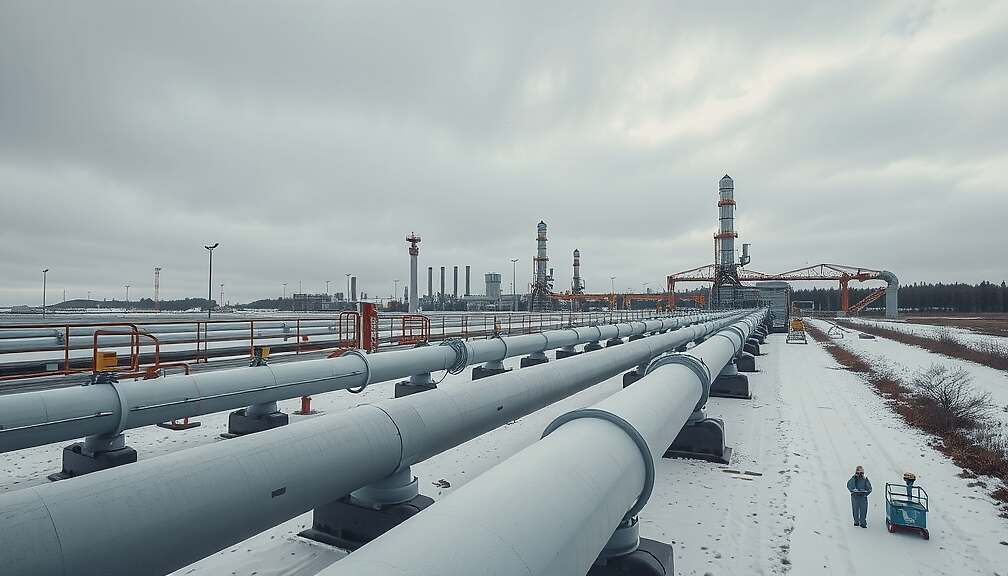
Germany’s gas storage facilities currently stand at 50.5% capacity, a considerable drop from the previous year’s levels. While the Bundesnetzagentur defends this reduction as “appropriate” given “changed market and flow conditions” the assertion glosses over the broader implications of diminishing reserves ahead of potential future disruptions. The agency’s reassurance feels less like a celebration of resilience and more like a carefully managed narrative aiming to quell public anxiety.
Gas consumption rose by 2.2% in 2025, reaching 864 Terrawatt-hours (TWh) compared to 845 TWh the previous year. This increase, split roughly evenly between residential/commercial users and industry, highlights the continued reliance on natural gas across vital sectors of the German economy. While consumption remains below pre-2018 averages, the upward trend warrants vigilance and accelerated efforts toward diversification.
The data reveals a concerning escalation in gas imports, surging to 1,031 TWh in 2025 from 864 TWh in 2024. This significant increase underscores Germany’s continued vulnerability to external forces, particularly given the overwhelming dominance of Norway (44%), the Netherlands (24%) and Belgium (21%) as primary suppliers. This reliance concentrates risk, exposing the country to potential supply bottlenecks triggered by geopolitical instability within those nations.
The relatively small contribution from Liquified Natural Gas (LNG) terminals – approximately 10% of total imports – represents a partial and arguably insufficient, hedge against reliance on pipeline gas. While the operationalization of these terminals is a positive development, the scale of investment and ongoing capacity expansion appears inadequate to sustainably wean Germany off its traditional sourcing.
Furthermore, a notable surge in gas exports – reaching 221 TWh in 2025 compared to 89 TWh in 2024 – further strains domestic reserves and potentially elevates the risk of supply shortages should unforeseen circumstances arise. The primary recipients of these exports-Austria, Czechia and Switzerland-highlight Germany’s role as a crucial energy provider within Europe, intensifying its responsibility and reinforcing its exposure to regional demand fluctuations.
Finally, while the Bundesnetzagentur claims to have surpassed the mandated 80% storage level by November 1st, achieving a national average of 70%, the emphasis on “compliance” raises questions about the robustness of the enforcement mechanisms and the true resilience of Germany’s gas security posture. The continued dependence on foreign suppliers and the relatively low storage levels cast a shadow over the regulator’s optimistic pronouncements, hinting at a more precarious situation than publicly acknowledged.