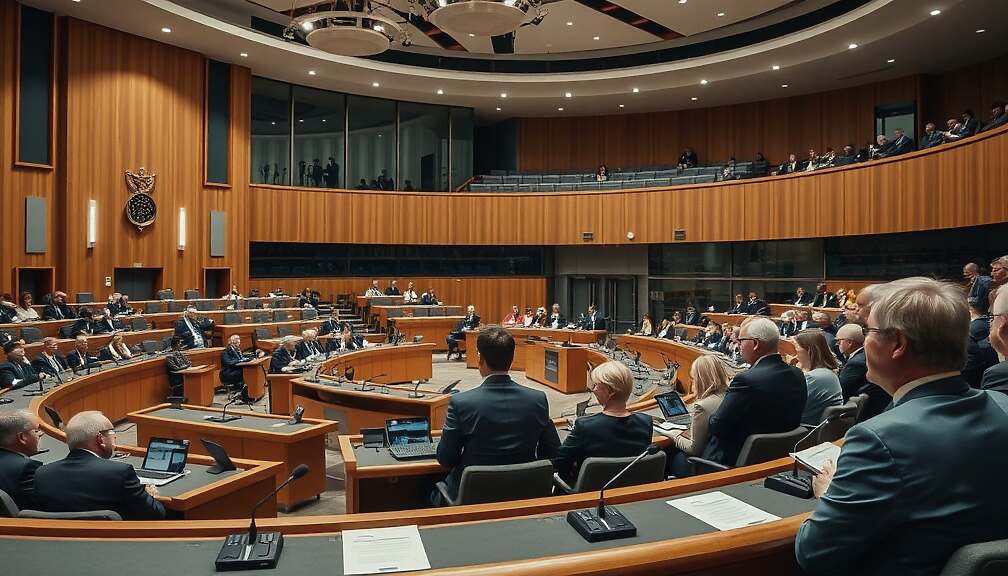
Federal Health Minister Nina Warken (CDU) promoted her controversial healthcare insurance reform in the Bundestag. She stressed that without taking action, the financial situation would worsen dramatically, stating that the health funds alone would be short nearly 19 billion euros next year, and the coverage gap could expand to around 44 billion euros by 2030. She emphasized that the goal of the new legislation is to prevent the continuous rise in contribution rates, not simply to achieve savings.
The legislative draft is based on the recommendations of the Health Finance Commission. Warken praised the commission, noting that their independent suggestions provided an excellent and factual contribution to the ongoing debate. She explained that the commission’s report established two crucial guidelines that the law follows: returning to an “income-oriented spending policy” and recognizing that the costs incurred by statutory health insurance (GKV) must provide a “demonstrable benefit” to the insured persons.
While admitting that the law requires everyone to contribute, the minister added that it demands no “unreasonable” sacrifices. She maintained that the regulations are socially viable, assuring that hardship provisions and contribution limits remain in place. Warken argued that all parties in the health sector contribute because everyone ultimately benefits from financially sustainable healthcare. She concluded that inaction would not help anyone.
Specific cuts proposed by the reform include reductions in hospitals, doctor’s fees, and the pharmaceutical industry. Furthermore, the plan dictates that patients will have to make increased co-payments for medications.