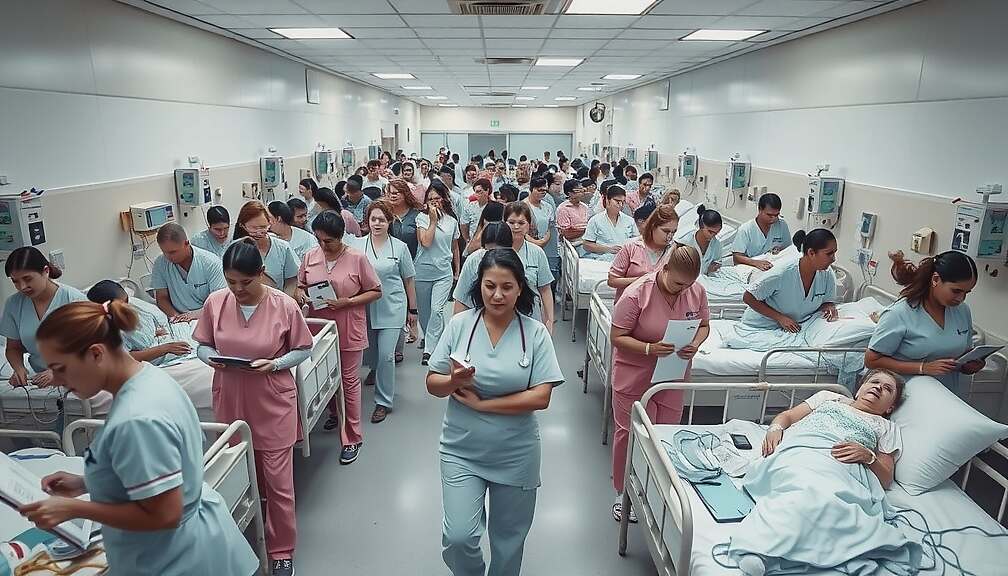
In 2024 the nursing workforce in German hospitals rose to roughly 409,000 full‑time equivalents, according to figures from the German Hospital Association’s (DKG) specialist‑worker monitoring module, which the news portal Politico has reported.
“Interest in working in hospitals and in related training pathways remains strong, highlighting the ongoing attractiveness of the health sector” said DKG’s vice‑chair Henriette Neumeyer. “Need‑based staffing levels are widely seen as essential but are still not universally accepted, mainly because they are perceived as overly rigid and bureaucratic, and their benefits have not yet fully materialised in hospitals”.
Rising nursing costs are increasingly weighing on statutory health insurers. The Federal Ministry of Health reports that nursing personnel costs jumped by about 12 % in 2025, while hospital‑treatment costs overall rose 9.6 %.
For the statutory insurers, this trajectory is unacceptable. Johannes Wolff, head of the hospital department at the GKV‑Spitzenverband, said: “We are now experiencing a dangerous disconnect between economic reality and political rhetoric in the hospital sector. While economic growth is stagnant, health‑care spending continues to climb unchecked. The primary driver of this trend is personnel – we now have a historic peak in staff numbers, yet the massive build‑up paradoxically does not translate into more efficient care. We keep financing ever more staff for a shrinking patient base”.
The German Nursing Council has rebuffed this criticism. Christine Vogler, president of the Deutscher Pflegerat, stated that the personnel expansion does not signal a resolution but merely underscores a long‑standing shortage that had been ignored. “More than 50,000 nursing posts were cut in the early 2000s, and these are only now being slowly restored” she added.