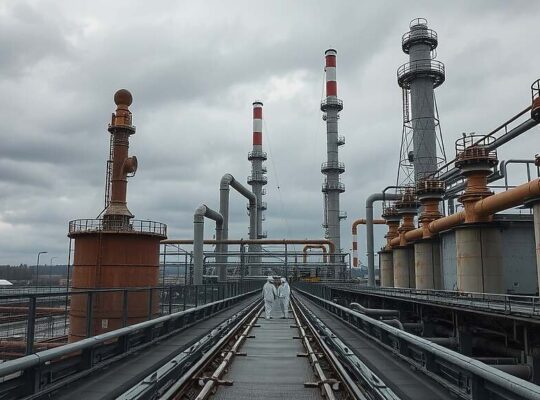
The abrupt closure of RW Silicium, Germany’s last producer of metallurgical silicon, casts a stark and unsettling light on the fragility of the nation’s industrial base and the widening chasm between ambitious policy goals and economic reality. The plant, located in Pocking, Bavaria, will cease operations by December 2025, a decision attributed by AMG, the parent company, to a complete lack of viable economic prospects despite years of unsuccessful rescue attempts.
The closure, impacting 110 employees, occurs at a deeply ironic moment. The German government, alongside the European Commission, has been actively pursuing greater independence in raw material supply chains, spurred by Beijing’s recent tightening of export restrictions on rare earth elements and technologically critical metals. China’s dominance as the primary exporter of numerous crucial materials has underscored vulnerability, prompting initiatives to bolster domestic and European production. RW Silicium’s demise undermines these efforts considerably.
The factors contributing to the plant’s downfall reveal a complex and troubling confluence of circumstances. A sharp increase in electricity prices following Russia’s invasion of Ukraine – reportedly tripling costs to nine cents per kilowatt-hour – proved insurmountable. Simultaneously, a broader industrial crisis in Germany has dampened demand, while heavily subsidized silicon produced in China exerts relentless downward pressure on global market prices. RW Silicium reportedly struggled to produce at prices even covering 60% of its production costs.
The situation at RW Silicium is not isolated. Duisburg-based PCC Group, similarly, temporarily halted silicon production in Iceland earlier this year, resulting in layoffs for over 100 employees. PCC’s CEO, Peter Wenzel, accuses European markets of being insufficiently protected from “unfair and often ruinous” competition originating from nations employing significantly lower standards regarding social considerations, worker safety, human rights and environmental protections.
The most contentious aspect of the issue revolves around what Wenzel describes as “dumping imports from China” particularly from the Xinjiang province. He alleges that significant quantities of silicon and related products are being manufactured using forced labor and environmentally unsustainable practices, effectively circumventing existing regulations and undercutting legitimate European producers. PCC hopes an anti-dumping complaint filed with the Icelandic Ministry of Economy might alleviate this pressure, though a reopening of their facility remains uncertain.
The closure of RW Silicium and the struggles of PCC highlight a critical disconnect between Germany’s stated ambition for industrial resilience and the harsh realities of global competition. The inability to effectively address the issue of subsidized, potentially illegally produced, imports from China raises serious questions about the long-term sustainability of Germany’s industrial sector and the efficacy of policies aimed at achieving strategic autonomy. The incident serves as a cautionary tale, underscoring the need for a more proactive and assertive approach to safeguarding European industry in the face of predatory trade practices and questionable labor conditions.