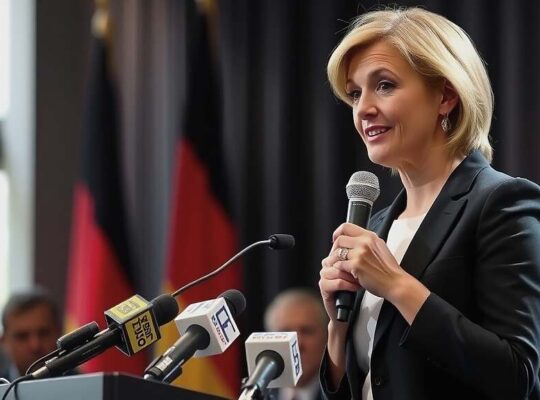
The leader of the Christian Democratic Union (CDU) in Baden-Württemberg, Manuel Hagel, has ignited a fierce debate within Germany’s political landscape, controversially suggesting that the nation should draw lessons from Greece’s austerity-driven reforms. Speaking to “Stern” following a visit to Athens, Hagel argued that the stringent reforms imposed on Greece during its debt crisis should serve as a model for a revitalized German economy he describes as facing a “burning house.
Hagel, who is positioned to succeed Winfried Kretschmann as Minister President of Baden-Württemberg in March, emphasized that his proposal isn’t a call for direct replication. He acknowledged the vast differences between the economic and political contexts of Germany and Greece. However, he maintained that Germany must adopt a similar willingness to undertake ambitious reforms to avoid a similar trajectory towards economic distress.
The CDU politician expressed deep concern over Germany’s current economic situation, citing three consecutive years of recession, escalating national debt and a gradual decline in industrial activity coupled with significant job losses. He pinpointed excessive bureaucracy, high taxes, expensive energy and elevated labor costs as key factors eroding Germany’s competitiveness. He noted that Greece’s reform policies, implemented under intense pressure from international lenders, specifically targeted these areas, ultimately contributing to renewed economic growth.
Hagel’s assertion is particularly provocative given the widespread criticism surrounding Greece’s imposed austerity measures, which inflicted considerable social hardship and prolonged economic pain. He cautioned against the dangers of propping up the German welfare state through unsustainable borrowing, warning that such practices would inevitably lead to even more drastic corrective measures later. The core of his argument posits a stark choice: proactive reform within the political center or a fragmentation of that center as the unresolved problems intensify.
While Greece currently boasts the highest economic growth rate within the European Union and has made strides in reducing its national debt, the nation’s overall prosperity continues to lag behind pre-financial crisis levels, a point Hagel’s critics are certain to highlight. The boldness of his suggestion, drawing parallels between Germany’s current challenges and Greece’s recent-and painful-experience, is likely to fuel a protracted and complex national conversation about Germany’s economic future and the necessary political sacrifices required to secure it.