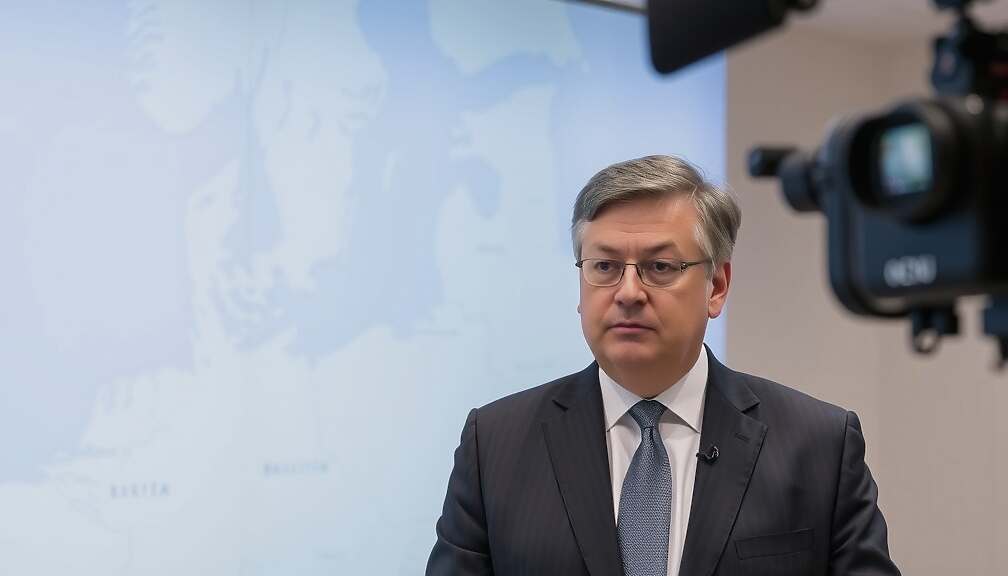
German Foreign Minister Johann Wadephul (CDU) put the Baltic Sea region under the spotlight as he left for Latvia and Sweden. “In that area, we and several of our closest partners in the European Union and NATO face hybrid threats from Russia” he said on Monday. “Whether we can permanently guarantee freedom, security, and prosperity across Europe ultimately hinges on our unity and strength” he added.
During his visit to Riga, Wadephul will talk with Latvian ambassadors about their experiences. They are “representatives of a country that feels Russia’s security posturing against Europe sooner and more directly than others”. He noted that no other EU region is as heavily impacted by the Kremlin‑orchestrated hybrid activities as the Baltics.
The minister stressed the urgency of acting on these lessons. “We cannot afford to lose time when it comes to protecting critical infrastructure or sanctioning Russia’s shadow fleet” he said. Strengthening security and resilience in the Baltic Sea area, he argued, is key to European stability.
Wadephul also highlighted Sweden’s role, especially following its NATO accession. As a leading Nordic state closely tied to Germany, Sweden brings significant security‑policy experience and capability to the alliance. “Sweden is firmly investing in national security and defence, and its modern defense service has set new benchmarks” he said.