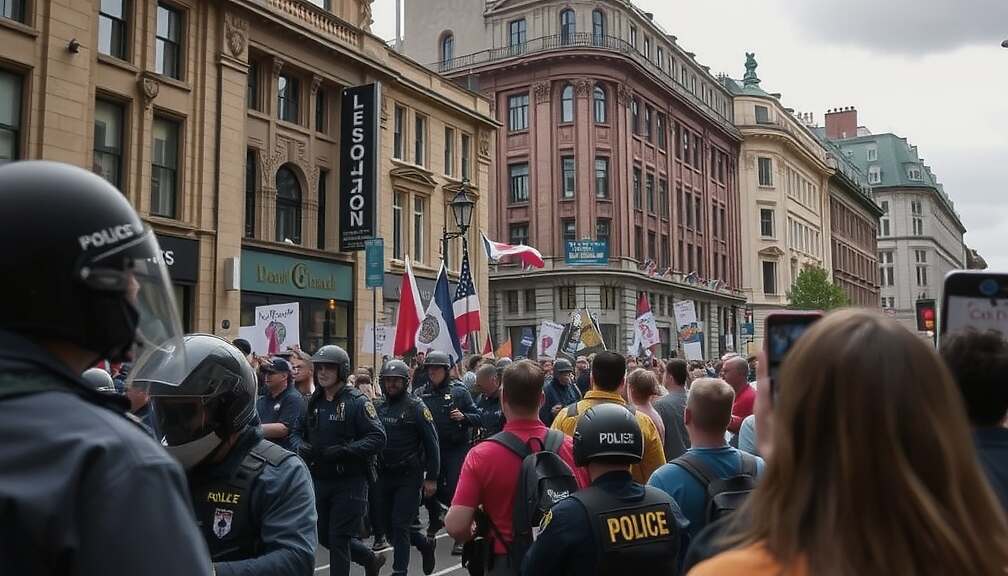
The weekend saw unprecedented scenes of unrest in Gießen, Germany, following planned demonstrations against the formation of a new youth wing of the Alternative for Germany (AfD) party. Hessens Interior Minister Roman Poseck confirmed that over 50 police officers sustained injuries during the confrontations, highlighting the escalating tensions surrounding the far-right political landscape.
While approximately 25,000 individuals participated in 26 counter-demonstrations, authorities identified roughly 1,000 individuals engaging in violent behavior. Injuries to officers ranged from abrasions and contusions to a fractured hand, inflicted by stone projectiles, kicks and pyrotechnics. The situation was further complicated by fifteen blockades, five of which required police intervention, culminating in a collision involving an ambulance during a road blockage – a stark indicator of the chaos and disruption. Reports also indicate attacks and obstruction of journalists attempting to cover the events.
Minister Poseck unequivocally condemned the violence, asserting that such actions cannot be construed as a defense of democratic principles. He specifically referenced an incident where a sitting AfD member of the Bundestag was attacked, implicitly suggesting a broader campaign of political intimidation. Poseck’s criticism focused particularly on the “Widersetzen” coalition, cautioning against what he termed a “false tolerance” towards perceived adversaries of democracy.
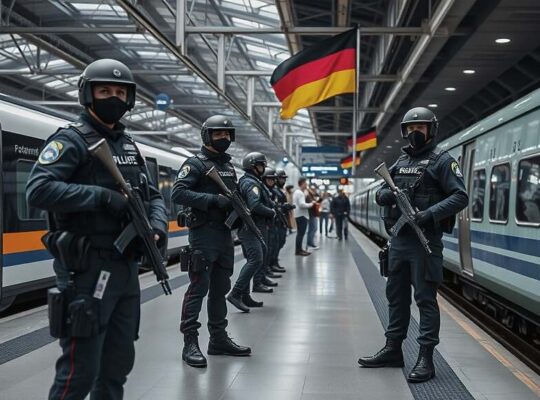
The massive police deployment, estimated to have cost several million euros, was portrayed by authorities as necessary to avert even greater unrest and to maintain a semblance of order. However, the scale of the response and the significant number of injuries underscore a deepening societal divide and raise critical questions about the effectiveness of current strategies for managing politically motivated violence. Concerns are emerging regarding the potential for escalation and the impact on the rule of law if such confrontations continue to proliferate. The incident also rekindles debate on how best to address the growing influence of extremist ideologies and their potential to incite civil unrest within German society.