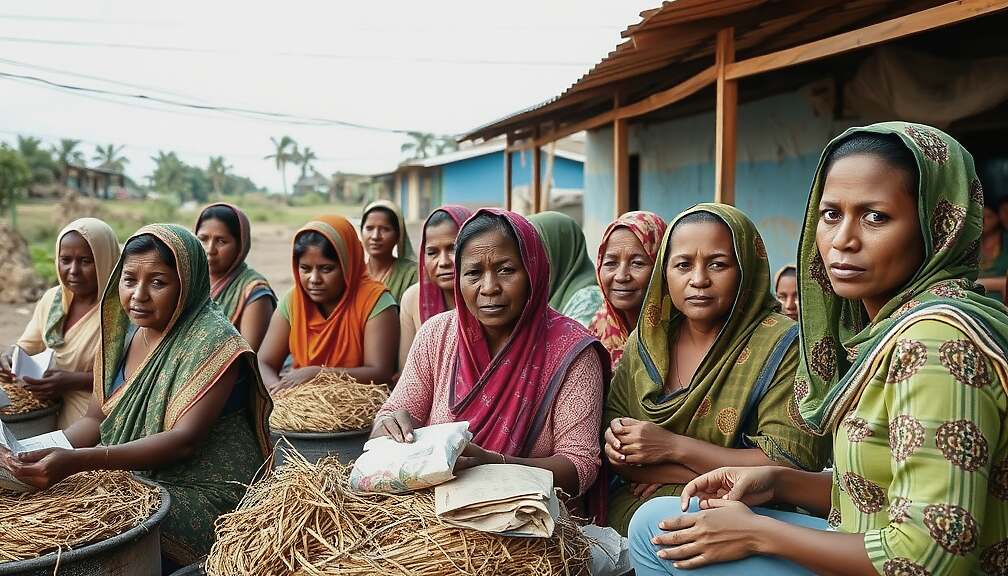
A new study from the Ifo Institute suggests a complex and potentially politically charged, relationship between globalization and gender equality, particularly in developing nations. The research indicates that increased global interconnectedness correlates with improvements in legal frameworks designed to ensure equal rights for women and men.
According to Ifo researcher Ramona Schmid, the data demonstrates a clear trend: “As cross-border trade and cooperation increase, women experience less legal discrimination”. The study’s findings quantify this effect, suggesting that a one-third increase in a nation’s KOF Globalization Index could translate to a roughly 12 percent improvement in the Women, Business and Law (WBL) Index, a World Bank measure of legal equality. Crucially, this positive impact is most pronounced in lower-income countries, raising questions about the potential of global integration to act as a catalyst for progress where legal reform has stagnated.
The KOF Globalization Index, which incorporates factors beyond mere institutional agreements – encompassing the actual movement of goods, capital and services – provides the measure of globalization for the study. The reliance on the WBL Index anchors the evaluation of legal equality, while data from the World Value Survey, encompassing over 300,000 individuals across a hundred nations, illuminates the subtle shifts in individual attitudes toward female empowerment. The survey reveals that individuals residing in more globally integrated societies are more likely to champion gender equality in crucial areas such as employment, political representation and educational opportunities.
However, the study’s implications are not without potentially contentious undertones. While the findings appear to offer a reassuring narrative about the benefits of globalization, they also invite critical scrutiny. The correlation established does not prove causation and the study does not account for other significant factors that influence gender equality, such as internal political will, cultural norms resistant to change and the potential for globalization to exacerbate existing economic inequalities.
Furthermore, the study risks being weaponized by proponents of unfettered globalization who may overlook the inherent vulnerabilities of developing nations exposed to global market forces. The potential for exploitation, displacement and the erosion of local traditions triggered by rapid integration remain persistent concerns. A truly equitable approach requires a nuanced understanding of globalization’s impact, recognizing that legal reform alone is insufficient without accompanying measures to ensure economic empowerment and social justice for women. The findings underscore the need for careful policy interventions designed to harness the potential of globalization while mitigating its risks, ensuring that the pursuit of economic integration does not come at the expense of true gender equality.