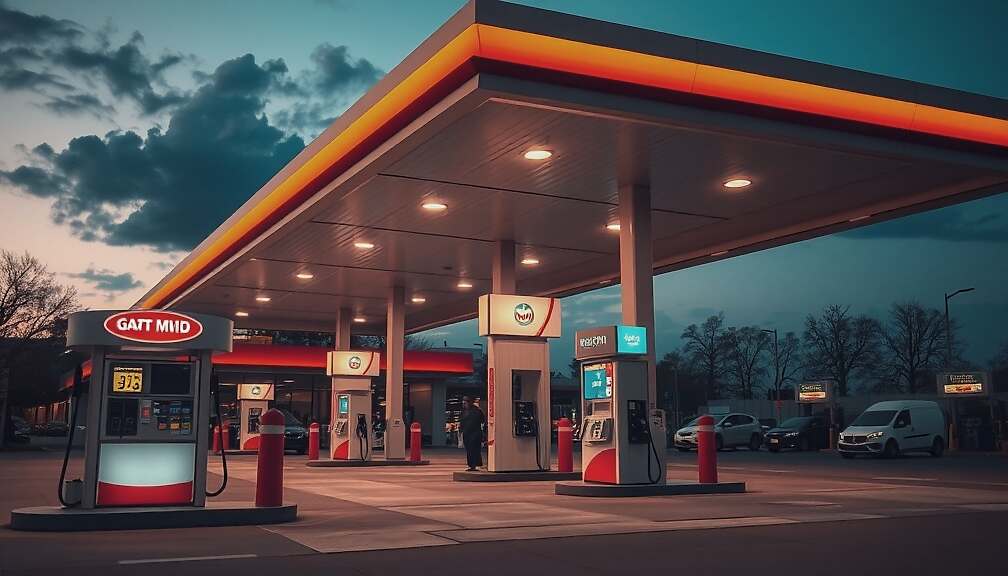
According to initial findings for the first month since the implementation of the so-called “12-hour rule” for gas stations, the proportion of price changes that violate the rule is less than three percent of the total number of price modifications. This information was revealed through the federal government’s response to an inquiry from the Left parliamentary faction, which the publication “Redaktionsnetzwerk Deutschland” (Saturday editions) reported. The MPs wanted to know how often the regulation-which dictates that fuel prices may only be increased once per day-had been broken previously.
The government’s answer further stated that over 90 percent of the noted violations occurred between 11:30 a.m. and 12:30 p.m., an occurrence that “at least partly indicates technical difficulties in introducing the new system”.
The package aimed at fuel price measures became effective on April 1st. Since then, the public discourse suggested that gas stations were massively ignoring the 12-hour rule. However, the federal government’s reply provides a different conclusion.
The response also noted that before the regulation was introduced, German gas stations averaged 20 to 22 price changes per day. Since the rule went into effect, the average has dropped to just 6 to 7 price changes, and these changes are primarily price reductions following the single allowed daily increase.
Regarding the price structure of the major oil companies, the adherence to the 12-hour rule does not reveal much about their pricing strategies. The Left faction also asked whether the government had any insights into the difference between the average price of diesel and gasoline at gas stations and the price of crude oil before and after the introduction of the fuel measures package. The official reply was sobering: due to the highly volatile nature of the market, the government could not derive any reliable conclusions from the difference between crude oil prices and the average price of diesel and gasoline at stations.
In light of these lacking conclusions, Ines Schwerdtner, the chairwoman of the Left party, criticized the existing gas station discount system. She told newspapers that “the federal government is completely clueless when it comes to the question of passing on the gas station discount”. Schwerdtner also criticized the government’s assertion that price reductions were being passed on, pointing out that mineral oil conglomerates were allegedly making “excess profits” of over 35 million euros daily.
Schwerdtner called for a “cap on profit margins” arguing that the cartels office needs additional powers to be effective. Addressing the 12-hour rule specifically, Schwerdtner stated that minimizing the significance of the violations was inappropriate. According to the Left party’s chairwoman, “anyone who relies only on market prices, voluntariness, and later evaluations in a crisis is managing exploding prices, rather than actively limiting them”.