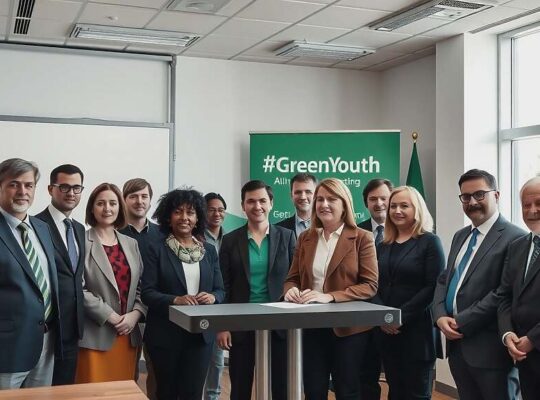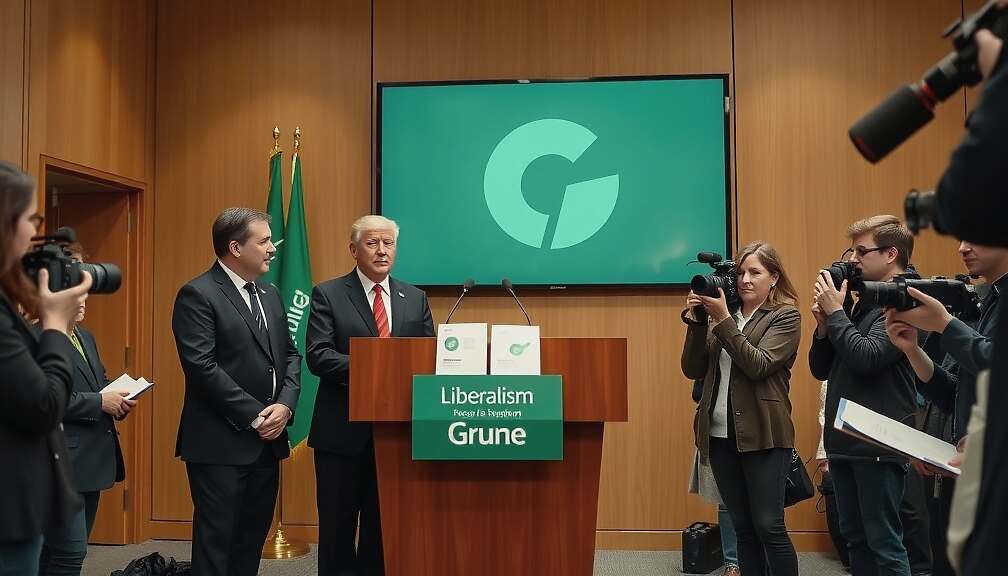
Leading members of Germany’s Green Party view a re‑formulation of liberalism as a core task for their own political project. In a guest essay in the Frankfurter Allgemeine Zeitschrift (FAZ), they claim to inherit the legacy of the Free Democratic Party (FDP), whose influence has grown in more and more parliaments.
Green Party chairwoman Franziska Brantner and the Green mayor of Hannover, Belit Onay, open their contribution by saying that the liberal idea is in crisis but not dead. They argue that a robust new liberalism must not pit freedom, justice, and sustainability against one another but bring them together. “That is the constructive task of a New Liberalism – and ultimately the task of the Greens” they write.
Their vision leans strongly on individual responsibility, rule‑making that resists paternalism, and harnessing market forces to tackle climate change. On security matters, they press for a European defence union.
Brantner and Onay express scepticism toward an overly aggressive gender policy. They claim that gender debates have sharpened awareness of subtle discrimination, yet they warn that turning anti‑discrimination demands into a challenge to normative universalism undermines the very foundation of liberalism. Freedom and equality, rooted in the universalist Enlightenment tradition from Locke to Kant, must remain the normative basis of any renewed liberalism.