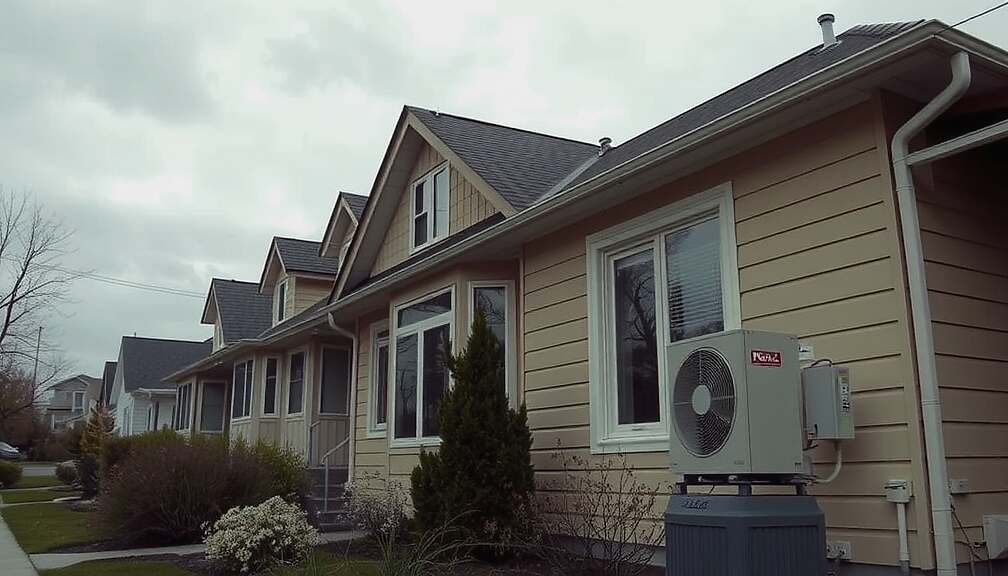
The Green Party is intensifying calls for a significant expansion of state subsidies for heat pump installations, specifically targeting low-income homeowners and challenging a growing political divide over Germany’s energy transition. Felix Banaszak, the party’s co-leader, argues that current levels of funding, while partially successful, fail to address the financial realities faced by many homeowners attempting to comply with mandated heating system upgrades.
Banaszak voiced concern that simply owning a home does not guarantee the financial means to undertake what can be a substantial investment in a new heating system, highlighting a burgeoning inequity as the nation strives to decarbonize its housing stock. He criticized what he characterized as a “culture war” against heat pumps, specifically pointing to ongoing debates surrounding potential cuts to existing subsidies championed by Economics Minister Katherina Reiche (CDU) and actively supported by CSU leader Markus Söder.
A faction within the Greens, spearheaded by Susan Sziborra-Seidlitz, a leading candidate for the upcoming state election in Saxony-Anhalt, is proposing a radical solution: initially free heat pump installations for those unable to afford even a small contribution or secure pre-financing from the KfW development bank. This proposal, set to be debated at the Green Party’s federal convention, asserts that individuals should not remain trapped in “fossil cost traps” due to financial limitations. The suggested approach involves financing these installations via interest-free loans with extended repayment terms.
Sziborra-Seidlitz’s ambition seeks to decouple climate action from socioeconomic privilege, questioning the feasibility of a just transition if affordability remains a major barrier. The proposed shift represents a potential escalation in the ideological battle surrounding Germany’s energy policy, prompting questions about the long-term sustainability and potential costs associated with such a large-scale program. Furthermore, it underscores the political tensions emerging as the government grapples with balancing environmental objectives and managing public finance. The debate surrounding the scale and scope of heating subsidies is likely to remain pivotal in the lead-up to upcoming elections and policy decisions.