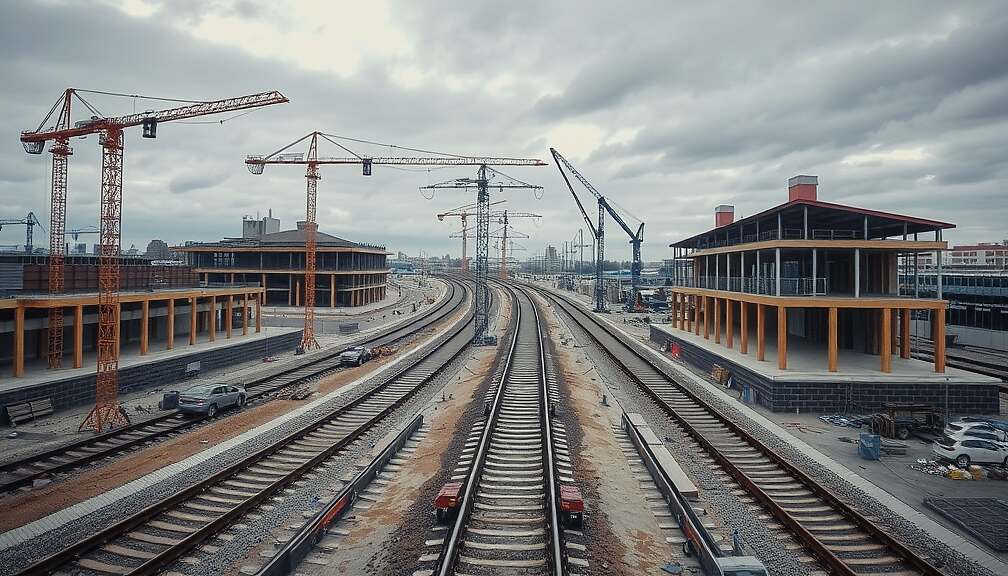
The ambitious expansion of Hamburg’s central railway station, a project deemed vital for the city’s infrastructure and regional connectivity, is facing significant and prolonged delays, now projected to commence no earlier than 2031. This setback, confirmed by Deutsche Bahn’s regional executive, Ute Plambeck, underscores a growing political impasse between the city of Hamburg and the federal government concerning funding responsibilities.
The Hamburg Hauptbahnhof, serving upwards of half a million passengers daily, has been consistently identified as critically overstressed. The planned expansion, intended to dramatically increase station capacity while preserving its historic facade, was initially slated for a construction start in 2028. A winning architectural design was selected as early as December 2021, demonstrating a prior commitment to the project’s progress.
However, the dispute over the approximately €1 billion price tag has effectively stalled the initiative. The disagreements mirror a broader tension surrounding infrastructure investment, with both sides questioning the fairness of the financial burden. Critics argue that the protracted negotiations reflect a systemic failure to prioritize essential public transport improvements, particularly in a region grappling with increasing population density and the demands of a modern economy.
Further complicating the situation is the fate of the planned six-kilometer Verbindungsbahnentlastungstunnel (VET), a crucial component intended to relieve congestion and enhance punctuality as part of the “Deutschlandtakt” (German Rhythm) schedule. The VET, carrying an estimated price tag of €3.4 billion, is now equally precarious due to unresolved financing questions. Hamburg’s Transport Senator, Anjes Tjarks (Green Party), has bluntly stated the unlikelihood of the tunnel’s completion before 2040, highlighting the uncertainty surrounding its future viability.
The delays raise serious questions about the federal government’s commitment to regional infrastructure projects and its ability to effectively collaborate with local authorities. This failure not only impacts Hamburg’s transport network, but also risks undermining the broader goals of Germany’s national transport strategy. The escalating costs and prolonged timelines associated with these infrastructural challenges inevitably strain public resources and further erode public confidence in the efficacy of government planning. The current situation highlights a pressing need for a re-evaluation of funding models and a more streamlined, collaborative approach to vital infrastructure development.