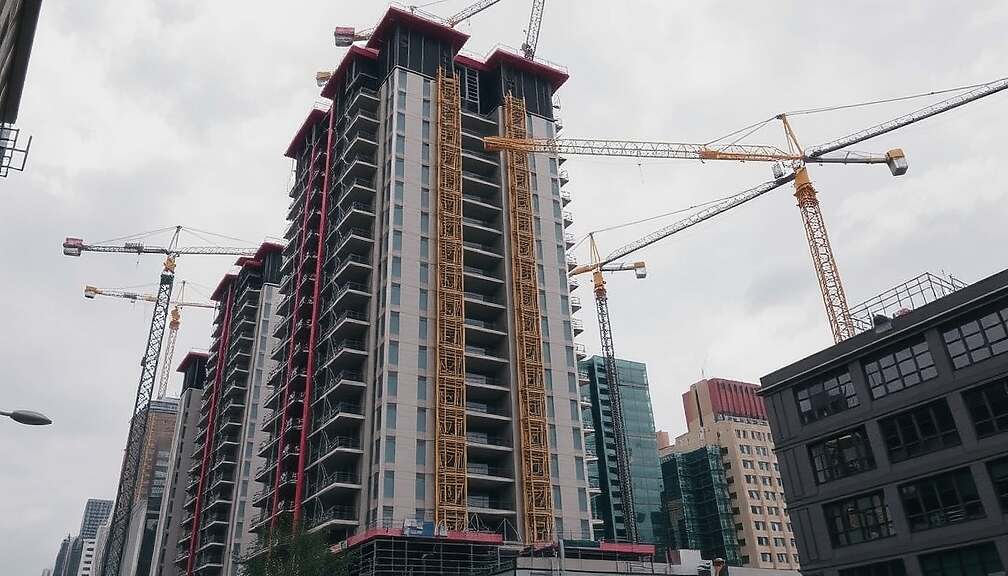
The German construction sector registered a surprising resilience in October 2025, with 19,900 housing units receiving building permits, marking a 6.8% increase compared to the same period in 2024, according to figures released Thursday by the Federal Statistical Office (Destatis). While superficially positive, a closer examination reveals a nuanced and potentially worrying reshaping of the housing landscape.
The surge is largely driven by a significant 11.4% rise in new construction, with 16,800 units approved. However, simultaneously, renovations and conversions of existing buildings experienced a discouraging 12.5% decrease, representing a loss of 400 permits. This divergence points to a potential shift in development priorities, potentially favoring large-scale projects over smaller, more localized improvements to existing infrastructure – a trend with potential implications for urban fabric and social integration.
Cumulatively, from January to October 2025, a total of 195,400 housing units secured building permits, demonstrating an 11.2% increase over the same period in 2024. This overall growth is disproportionately linked to new construction, specifically a robust 14.0% increase in approvals for new residential buildings – some 19,600 units.
A particularly noteworthy aspect is the surge in single-family home approvals, climbing 16.6% to reach 37,000. While seemingly indicative of growing demand for detached housing, this could exacerbate existing trends towards suburban sprawl and increased car dependency, further straining essential public services and infrastructure. Conversely, approvals for two-family homes saw a slight decline, suggesting a gradual cooling in that segment. The largest contribution to the overall growth still comes from multi-family dwellings, with approvals increasing by a substantial 13.2% to 104,100, a positive signal for density and affordability – although the actual affordability of these units remains a persistent question. Increased approvals for student housing (+43.0%) also signal shifting demographic and economic pressures.
However, approvals for housing within non-residential buildings (e.g., caretaker apartments above commercial spaces) witnessed a concerning 15.2% drop, losing 600 permits. This potentially signals a slowdown in integrated urban solutions, a development that warrants further scrutiny given the need for diverse housing options within city centers.
Finally, while renovation projects saw a modest 2.1% increase in approvals, the overall picture remains complex. The disproportionate focus on new construction, particularly large-scale projects and single-family homes, raises concerns about equitable access to housing, sustainable urban development and the potential long-term consequences for Germany’s housing stock and social fabric. Government policies encouraging denser, sustainable housing solutions may need to be re-evaluated to address these emerging trends and ensure a more balanced and inclusive housing market.