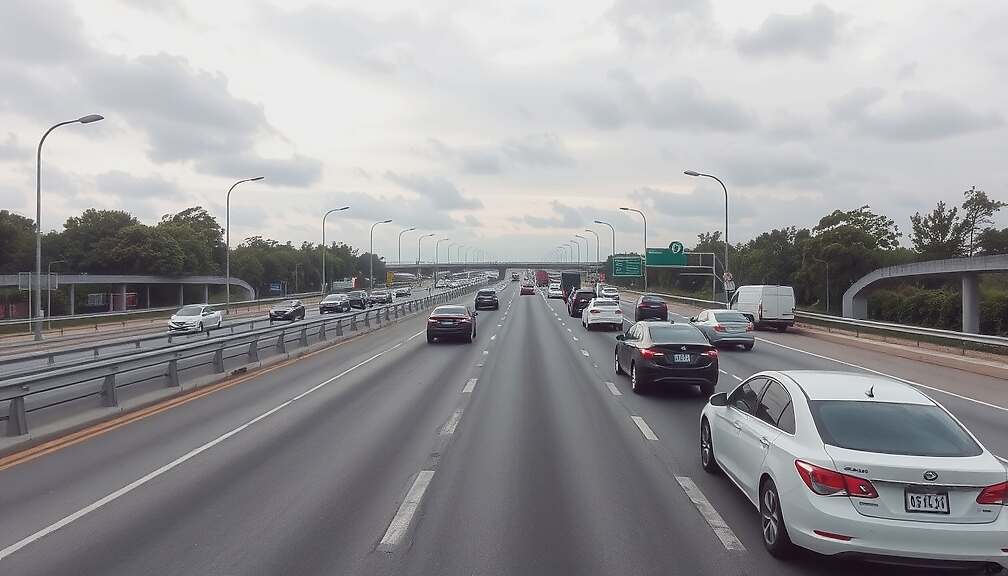
In recent times, owning and operating a vehicle has become significantly more expensive, a trend primarily driven by rising fuel costs. According to data released by the Federal Statistical Office on Monday, the Kraftfahrer Price Index-which tracks the costs of goods and services related to car ownership-showed an increase of 6.7 percent in March 2026 compared to the previous year. This rate of increase was higher than the general consumer price inflation recorded over the same period, which rose by 2.7 percent overall.
Consumers clearly felt the impact of global events at the gas pump in March 2026. Fuel prices jumped 20.0 percent year-on-year, with diesel fuel increasing by 29.7 percent, premium gasoline by 17.3 percent, and autogas by a slight 1.1 percent. Other costs also rose compared to the previous year, including repairs, inspections, parking fees, and similar services (+4.1 percent); used cars (+2.9 percent); and driving school/license fees (+2.8 percent). On the other hand, costs for new vehicles, including motorhomes (+2.4 percent), car insurance (+1.4 percent), and rent for garages and parking spaces (+1.4 percent) rose at a slower pace than average. Notably, replacement parts, accessories, and care products actually decreased in price by 1.3 percent compared to the previous year.
For public transportation, ticket prices rose in March 2026. Consumers had to pay 6.2 percent more for combined bus and rail tickets, a rise influenced by the Deutschlandticket price increase in January 2026. A local train journey increased by 5.3 percent over the past year, while a long-distance train trip saw a 1.4 percent increase.
Looking at the medium-term picture involving car, bus, and rail travel, price developments show varied trends. Over the period from 2020 to 2025, the costs tracked by the Kraftfahrer Price Index rose by 31.2 percent. This growth was higher than the general consumer price increase of 21.9 percent over the same period. Certain components increased substantially: vehicle insurance (+63.0 percent), used cars (+45.3 percent), and driving school/license fees (+42.7 percent). Fuel costs also rose significantly (+37.5 percent), with autogas increasing by 76.2 percent, diesel fuel by 44.2 percent, and premium gasoline by 34.9 percent.
Other sectors also saw faster-than-average increases over five years. Costs for repairs, inspections, parking, and similar services rose by 34.5 percent; replacement parts and accessories increased by 24.2 percent; and new vehicles, including motorhomes, rose by 23.9 percent. In contrast, rents for garages and parking spaces (+7.2 percent) and vehicle tax (+2.3 percent) saw relatively small increases.
The picture is even more mixed concerning rail and bus transport. Between 2020 and 2025, the cost of local train travel rose by 20.1 percent. For long-distance rail travel, prices remained nearly level with 2020 (€0.5 percent increase). However, combined tickets for rail, bus, and similar services actually decreased by 18.0 percent, largely due to the introduction of the Deutschlandticket in May 2023.
For household budgets, spending on mobility accounts for over one-tenth of total monthly expenditure. In 2023, households spent an average of 361 euros per month on transport-this represented 11.9 percent of total consumption spending, making it the third largest expenditure block after housing and food. Compared to 2018, monthly mobility spending has fallen by 4.7 percent (when it amounted to 379 euros, or 14.0 percent of total monthly spending).
Transport expenses encompass costs for purchasing, leasing, maintaining, and repairing vehicles, as well as fuel and tickets. In 2023, the largest components of transport spending consisted of purchase costs, including leasing for cars (104 euros), and fuel/lubricants (100 euros). Average spending on passenger transport services stood at 47 euros, with 31 euros allocated for bus, train, or taxi services.