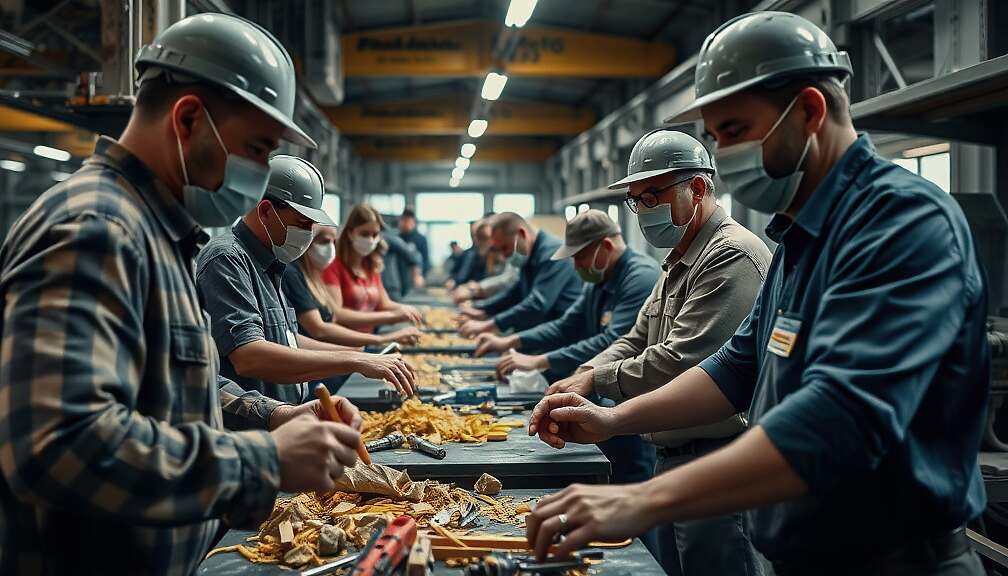
In several occupations facing labor shortages, individuals with migration backgrounds are disproportionately represented. According to data released by the Federal Statistical Office (Destatis) on Monday, for instance, 56 percent of chefs reported having a migratory background in 2025.
This high representation was also noted in more than half of the workers in food production (55 percent), groundwork (54 percent), scaffolding construction (51 percent), and meat processing (51 percent). The proportion was also above average among bus and tram drivers, as well as service staff in the hospitality industry (47 percent each).
Across the entire economy, roughly one quarter (27 percent) of all dependent employees reported having a migratory history-meaning they or both of their parents immigrated to Germany after 1950. In designated bottleneck professions, designated by the Federal Employment Agency (BA) as facing or threatening a skills shortage, the presence of immigrants is even higher. These high-demand areas include plastics and rubber manufacturing (44 percent), commercial freight drivers (41 percent), hotel service (40 percent), nursing professions (33 percent), dental assistants (32 percent), and building electrification (29 percent).
The lowest representation of individuals with a migratory background was found in shortage professions such as emergency medical services (7 percent), meat sales (13 percent), and agriculture (15 percent).
Conversely, people with migratory backgrounds are also underrepresented in certain occupations that are not classified as having a shortage by the BA, notably policing (8 percent), public administration and judicial services (9 percent each), and teaching (9 percent for vocational subjects; 10 percent for primary level).
The integration of immigrants into the local labor market is influenced by several factors, particularly their country of origin and the duration of their stay in Germany. Immigrants from EU member states benefit from the freedom of movement of workers and often experience a quicker recognition of their professional qualifications, leading to faster integration. In 2025, 89 percent of men and 73 percent of women aged 25 to 59 who had lived in Germany for less than five years and were from the EU were employed.
For other groups, the labor market process can be longer. Among men who migrated from Africa in this age group and had been in Germany for less than five years, 79 percent were employed; this figure was 47 percent for women. For those from the Near and Middle East, 57 percent of men and 28 percent of women were employed after a short stay. This slower initial integration for women is often attributed to family commitments, as they tend to bring accompanying family members. However, the employment rates increase for those who have lived in Germany longer. For migrants from Africa, the employment rate approached 82 percent for men and 68 percent for women after 20 to 25 years in Germany. Similarly, men from the Near and Middle East reached an 87 percent employment rate, and women reached 79 percent, after extended periods of residence. For comparison, the overall employment rate for all 25-59-year-olds, regardless of migration background, was 88 percent for men and 81 percent for women, according to the Federal Agency.