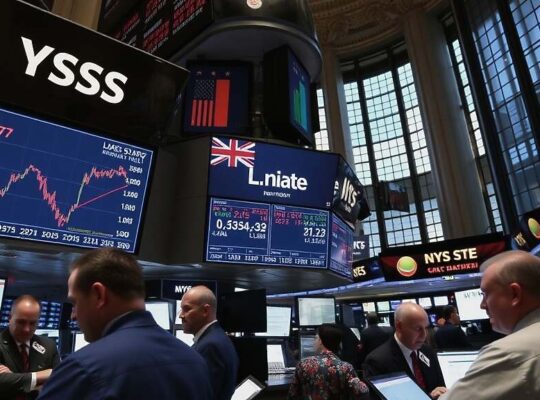
Market Sentiment Remains Cautious Ahead of Federal Reserve Decision
U.S. equity markets exhibited a mixed performance Thursday, reflecting a pervasive caution among investors ahead of next week’s Federal Reserve interest rate decision. The Dow Jones Industrial Average closed marginally lower, declining 0.1% to 47,851 points, signaling a continued hesitancy within the broader market. The S&P 500 briefly edged slightly higher before ultimately settling with a fractional gain, while the Nasdaq 100 experienced a slight downturn, mirroring the uncertainty pervading the technology sector.
The prevailing expectation of a rate cut by the Federal Reserve, solidified by the recent release of private sector employment data, is currently holding back substantial market movement. While the anticipated cut offers some potential for future gains, the central bank’s policy stance and accompanying commentary are being scrutinized for any signals that could alter this trajectory. The release of the Personal Consumption Expenditures (PCE) price index, the Federal Reserve’s preferred inflation gauge, on Friday is now pivotal, potentially injecting volatility and providing further clues about the timing and extent of future rate adjustments.
Beyond equities, the euro weakened against the dollar, trading at $1.1644, a trend likely exacerbated by anticipation surrounding the monetary policy divergence between the Federal Reserve and the European Central Bank. This fluctuation in currency values has broader implications for international trade and investment flows, particularly impacting European exports.
Precious metals registered a modest increase, with gold prices climbing to $4,210 per fine ounce, reflecting a persistent demand for safe-haven assets amidst economic unease. Simultaneously, oil prices experienced a notable surge, climbing to $63.30 per barrel of Brent crude, a rise attributed to geopolitical tensions and ongoing concerns about supply disruptions. The increased oil price is likely to fuel inflationary pressures, potentially complicating the Federal Reserve’s policy decisions and adding to the cautious investor sentiment.