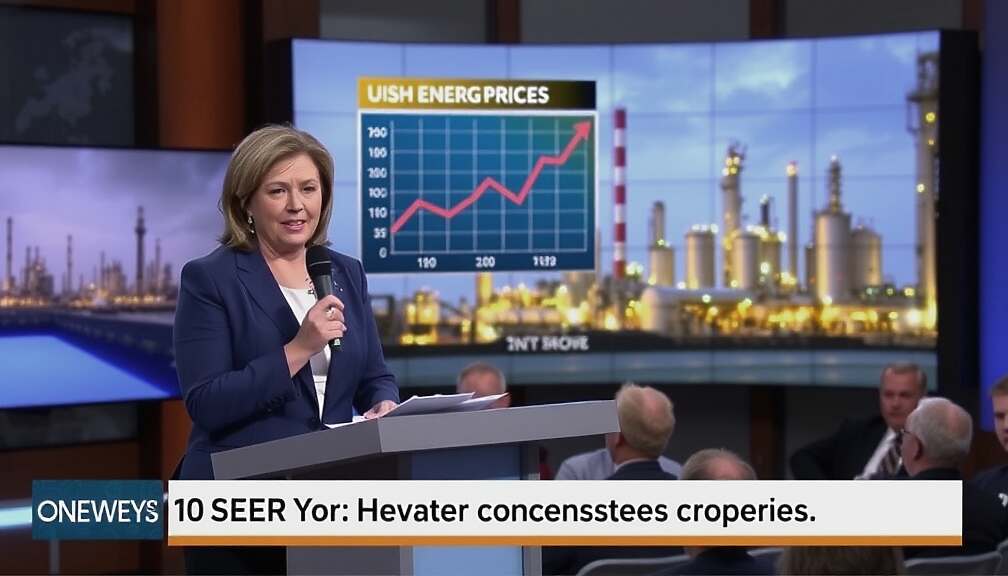
Veronika Grimm, director of the German Institute for Economic Research (Ifo), warns that the ongoing Iran conflict is pushing up oil and gas prices, and the resulting energy, transport and food price shocks are likely to keep inflation rising. She told several newspapers of the Funke Media Group that the longer the Strait of Hormuz remains blocked, the stronger the global impact will be: “Rising energy prices act like a global tax on growth, and these developments will noticeably dampen worldwide economic prospects” she said.
The Ifo currently expects the inflation rate to climb to about 2.5 percent if oil and gas prices fall within the coming weeks. “That short‑term jump in energy costs would slow this year’s growth by roughly 0.2 percentage points compared with pre‑war estimates, leaving us with an outlook of 0.8 percent growth this year and 1.2 percent next year” Timo Wollmershäuser, chief of Ifo’s macroeconomics team, added.
However, if fossil‑fuel prices stay high for an extended period, inflation could peak near 3 percent. In that scenario growth would be pushed further back, to just 0.6 percent this year and 0.8 percent next year, Wollmershäuser explained.
Ramona Pop, the chairwoman of Germany’s Federal Consumer Centre, has been cautious about predicting another wave of food‑price inflation. “Supply is currently secured, and supply chains are largely stable. In the medium to long term, high fuel and fertilizer costs could raise the price of some processed products” she said. Pop urged the federal government to increase transparency in food‑price formation so that potential cost drivers can be identified and addressed early.