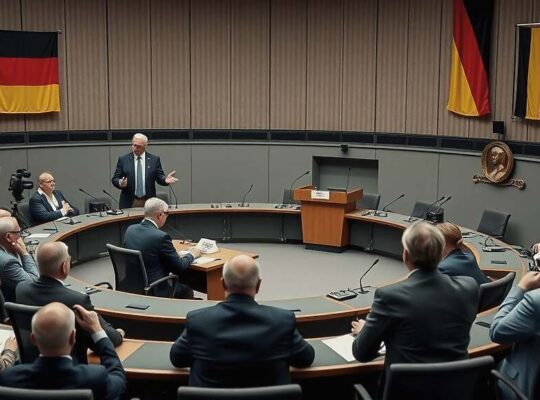
The German judiciary is sounding the alarm, urgently calling on policymakers to revitalize a stalled “Rule of Law Pact” to address critical staffing shortages and a pervasive digital backlog plaguing the nation’s courts and prosecution services. The Deutscher Richterbund (DRB), the German judges’ association, warns that the erosion of public trust in the legal system poses a significant threat to the foundations of German democracy.
Speaking to the “Rheinische Post” DRB Federal Managing Director Sven Rebehn emphasized that the current situation, characterized by overwhelmed public prosecutor’s offices and courts struggling to keep pace with caseloads, is directly contributing to declining public confidence. “As long as state prosecution services and criminal courts are chronically understaffed and unable to manage their workload and court proceedings continue to be excessively prolonged, the public’s faith in the rule of law will continue to diminish” he stated.
Recent polling data reinforces this concern. A December 2023 survey conducted by the Allensbach Institute reveals a noticeable decline in public support for the judiciary. Notably, approval ratings for the Federal Constitutional Court plummeted from 81% in 2021 to just 63% in 2023. This loss of confidence is further underscored by the fact that four out of five respondents expressed dissatisfaction with the length of court proceedings and the perceived overburdening of the justice system.
Rebehn’s call for a renewed Rightsstaatspakt is more than just a plea for increased resources; it represents a recognition that the judiciary’s credibility is at stake. The declining public backing, as revealed in surveys, signals a creeping crisis of legitimacy. Critics suggest that the original pact, while well-intentioned, failed to deliver on its promises due to insufficient political will and inconsistent implementation across different levels of government.
The DRB’s intervention highlights a potentially dangerous trend: a disconnect between the perceived impartiality and efficiency of the legal system and the lived experiences of citizens. Unless immediate and decisive action is taken to address the underlying structural problems-including tackling the persistent shortage of judges and prosecutors and accelerating digitalization efforts-the damage to public trust could have far-reaching consequences for the stability and effectiveness of the German Rechtsstaat. The political impetus for a meaningful, fully funded and consistently enforced pact is now demonstrably essential.