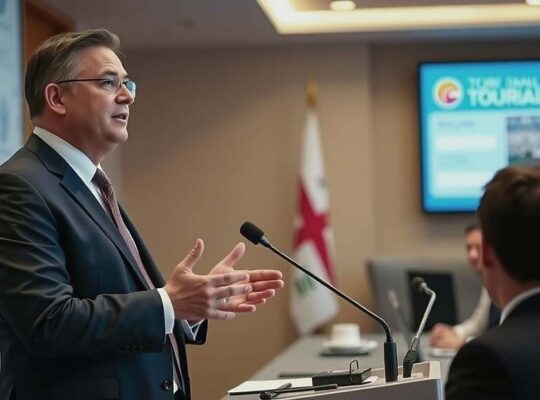
The conservative Christian Democratic Union (CDU) voiced cautious support for the increasingly assertive U.S. policy towards Venezuela, even as it cautioned against military intervention. Jürgen Hardt, the CDU’s spokesperson for foreign policy, defended President Trump’s actions, suggesting a “regime change” was a justifiable measure in the absence of viable alternatives.
Hardt’s remarks, delivered to RTL and ntv, echoed accusations of systematic oppression under President Nicolás Maduro, citing the suppression of peaceful protests and asserting that the Maduro regime operates as a “major drug trafficker” posing a serious threat to global youth and security. These assertions, already frequently leveled against the Venezuelan government, were accompanied by a seeming endorsement of U.S. efforts to destabilize the Maduro administration.
While appearing to align with Trump’s strategy, Hardt also expressed reservations regarding a potential escalation to military action. “An attack on Venezuela would be a step that goes very far, probably too far” he stated, indicating a preference for continued pressure through threats rather than direct military engagement.
Adding a layer of strategic complexity, Hardt posited a potential connection between the U.S. posture toward Venezuela and the ongoing conflict in Ukraine. He suggested that Trump’s intensified pressure on Caracas is intended, at least in part, to exert pressure on Russia, given Maduro’s known relationship with President Putin. This observation highlights the potential for geopolitical maneuvering and the entanglement of regional instability with larger international power dynamics. The CDU’s cautious endorsement, coupled with warnings against military action, underscores the delicate balance between advocating for regime change and avoiding a further escalation of tensions in a volatile region. The statement also raises critical questions about the legality and ethical implications of externally orchestrated regime changes, particularly those wielding the veiled threat of military force.