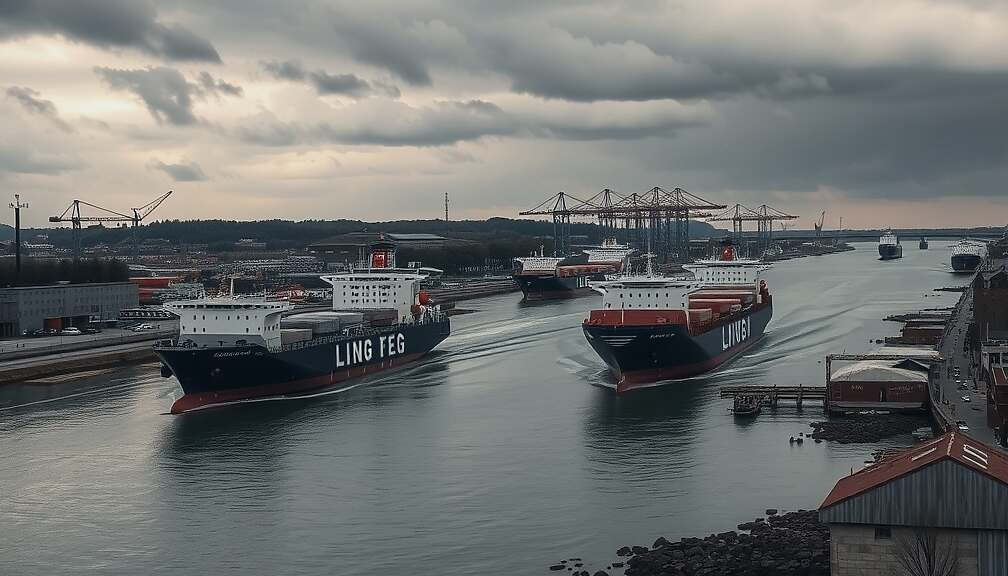
The increasingly low water levels in the Rhine, Elbe, and Danube are posing growing challenges for the construction industry. According to Tim-Oliver Müller, CEO of the industry association HDB, these waterways are vital for transporting large amounts of heavy goods, including the raw materials and supplies needed at construction sites.
For example, bitumen, which is used in asphalt production, is often transported in massive quantities via inland vessels. While companies can theoretically switch to road and rail transport when water levels drop, Müller notes that for very large volumes, barges cannot be easily replaced by trucks or trains.
Furthermore, ships are currently unable to be loaded to full capacity because the insufficient depth prevents it, which in turn increases the cost per ton transported. For the construction sector, this primarily translates into the potential for material supply to become both more expensive and more difficult to plan for.
The association chief warned that while widespread construction halts are not currently anticipated, the longer and more severe the low-water phase lasts, the greater the risk of bottlenecks, escalating logistics costs, and delays. Suppliers have already begun alerting customers to potential delivery shortages should the current situation persist.