The Venezuelan opposition figure Maria Corina Machado has lauded recent U.S. actions concerning Venezuela, signaling a significant escalation in the ongoing political crisis and raising complex questions about international intervention and the legitimacy of the current government. Machado, recipient of last year’s Nobel Peace Prize, released a statement Saturday afternoon offering unequivocal support for what appears to be a shifting geopolitical landscape surrounding the Maduro regime.
Machado’s declaration directly addressed the potential for international legal accountability for Nicolas Maduro, citing “gruesome crimes” committed against Venezuelans and citizens of other nations. She framed the U.S. involvement as fulfilling a promise to uphold the rule of law, an assertion likely to draw criticism from those wary of external influences in Venezuela’s internal affairs. The statement carefully avoids specifying the exact U.S. actions being applauded, leaving room for interpretation but strongly hinting at the recent developments regarding asset seizures and potential arrest warrants.
A particularly contentious element of Machado’s statement is the call for Edmundo González, who contested the July 2024 presidential election against Maduro and has been residing in Spain, to “immediately assume his constitutional mandate” and be recognized as the commander-in-chief by the Venezuelan armed forces. This explicit endorsement of González as a potential replacement for Maduro, coupled with the assertion that they are “ready to exercise the mandate and take power” suggests a coordinated effort to destabilize the Maduro government and install an alternative leadership.
Observers are questioning the legal standing and constitutionality of such a transfer of power, particularly given that González officially lost the election. The move risks further polarizing the nation and potentially triggering a violent power struggle.
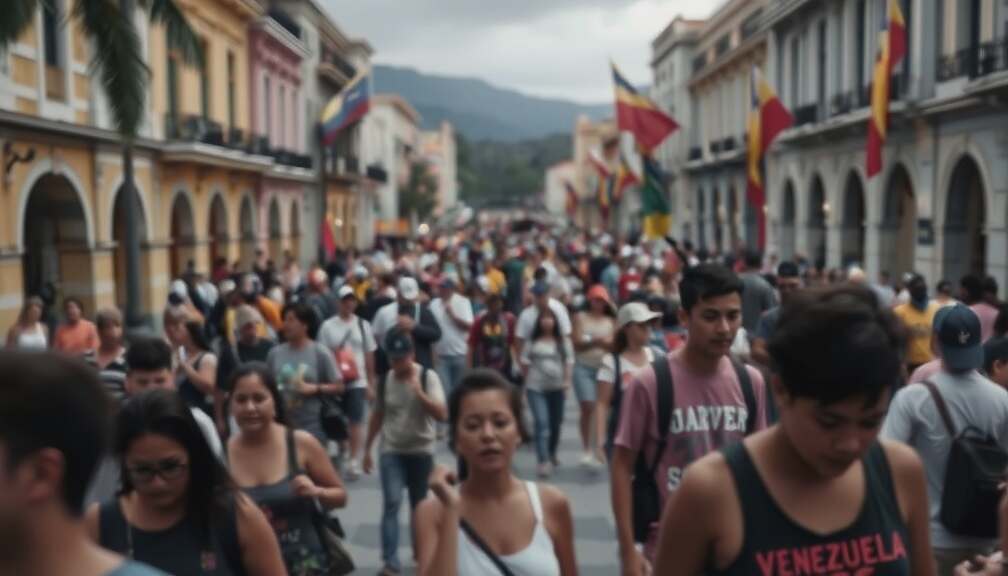
Machado’s appeal to Venezuelans abroad further underscores the strategy of seeking international support to pressure the Maduro regime. The call for mobilization of governments and citizens globally reflects a recognition that internal opposition may not be sufficient to overcome the entrenched power of the current administration. However, this reliance on international backing runs the risk of reinforcing perceptions of Venezuela as a pawn in a larger geopolitical game, potentially eroding any claims to national sovereignty and self-determination.
The implications of Machado’s statements are far-reaching. They represent a boldness unseen in the Venezuelan opposition, signaling a willingness to embrace more assertive and potentially risky, strategies. The legitimacy of this pathway and the potential consequences for the Venezuelan people, remain to be seen.