President Emmanuel Macron is urging Europe to solidify its position as a global leader in decarbonization efforts, while simultaneously acknowledging the substantial challenges that lie ahead in the next decade. In a commentary published in the German business daily “Handelsblatt”, Macron lauded France’s climate policy progress since the landmark 2015 Paris Agreement, yet cautioned against complacency.
France has reportedly reduced its greenhouse gas emissions by 30% compared to 1990 levels, significantly advancing towards the ambitious target of a 50% reduction by 2030. Macron attributed this success to a uniquely “ecological approach” that, in his view, successfully intertwines economic progress with environmental protection, demonstrably reducing both emissions and unemployment.
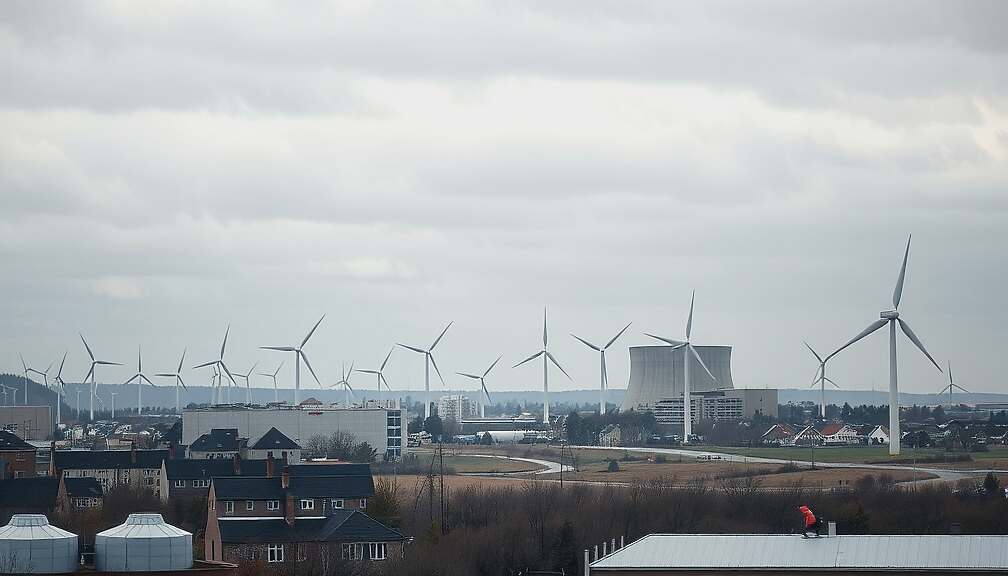
A cornerstone of France’s strategy revolves around a diversified energy mix that includes a renewed commitment to nuclear power. The construction and financing of six new EPR2 reactors are already underway, alongside the development of smaller-scale reactors intended for heating applications. This controversial decision, given the ongoing debates surrounding nuclear safety and waste disposal, is presented by Macron as a necessary component for achieving decarbonization goals. Alongside nuclear energy, France has aggressively expanded renewable energy sources, achieving a reported 95% decarbonization of its electricity production in 2024 – a statistic he highlights as globally leading.
However, Macron’s address functions as a pointed call to action for the entire European Union. He emphasized the urgent need to extend and harmonize these efforts across the bloc, advocating for simplified regulations, increased innovation and robust protection against unfair competition. This implicitly criticizes the often-fragmented and bureaucratic nature of EU climate policy and the varying levels of commitment from member states.
The President expressed anticipation for forthcoming announcements from the European Commission, hoping for a demonstrable shift towards a “genuine European preference” – a strategic prioritization of ambitious decarbonization projects – that will position Europe as the undisputed vanguard of global climate action. The success of this endeavor, however, rests on overcoming internal political divisions and ensuring a unified, assertive approach to tackling climate change on a continental scale.