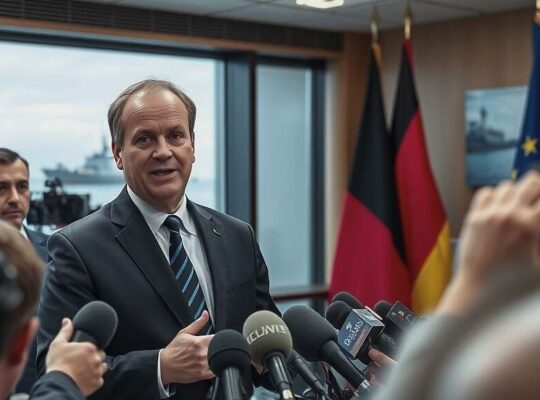
Following a high-stakes meeting in Brussels Friday evening, German Chancellor Friedrich Merz, Belgian Prime Minister Alexander De Croo and European Commission President Ursula von der Leyen announced a tentative agreement regarding the contentious issue of utilizing frozen Russian assets to support Ukraine. While declaring a “mutually agreeable solution” is in sight, significant political and legal hurdles remain, particularly concerning Belgium’s deep-seated reservations.
The discussions centered on the potential use of approximately €200 billion in assets belonging to Russia’s Central Bank, currently immobilized within the EU’s financial system. The European Commission is pushing for a framework to channel €90 billion to Ukraine by 2027, a sum deemed “of central importance for Europe’s security” given the escalating geopolitical climate.
Belgium’s opposition stems primarily from concerns surrounding liability. A significant portion of these frozen assets are managed by Euroclear, a securities settlement firm headquartered in Brussels. Belgian officials fear the nation could be held liable for potential claims arising from utilizing the assets, effectively shifting the risk burden onto a single member state. This concern has become a substantial political stumbling block, with critics arguing that it creates an uneven distribution of responsibility among EU nations.
Chancellor Merz acknowledged Belgium’s “undeniable” worry and stressed that any resolution must ensure “all European states bear the same risk”. This signals a recognition that simply overriding Belgian concerns is politically untenable and potentially legally perilous.
The rapid prioritization of the meeting, leading to the postponement of a previously scheduled visit to Norway, underscores the urgency felt by EU leaders to find a resolution ahead of the European Council meeting on December 18th. However, the delicate balance between supporting Ukraine’s financial needs and safeguarding the financial interests and legal standing of individual member states remains a precarious challenge and the announced agreement is contingent on addressing Belgium’s liability concerns in a manner acceptable to all parties. The long-term legal ramifications of repurposing sovereign assets also remain largely unaddressed, raising questions about future precedent and the integrity of European financial stability.