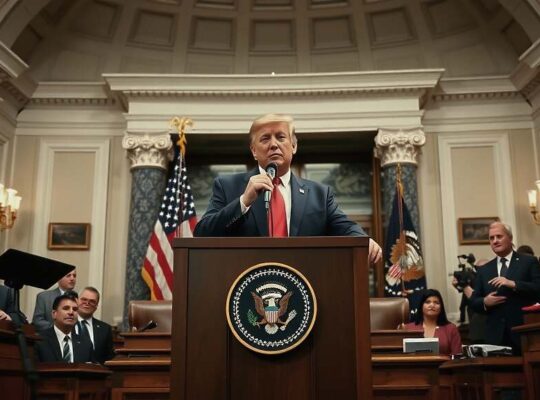
The German government’s response to recent Ukraine negotiations in Florida has been markedly restrained, raising questions about the degree of alignment between Berlin and Washington on potential pathways to resolution. Following a meeting between US President Donald Trump and Ukrainian President Volodymyr Zelenskyy, which produced optimistic pronouncements from both leaders and European Commission President Ursula von der Leyen, the German government has adopted a cautious tone, deliberately avoiding mirroring the declared progress.
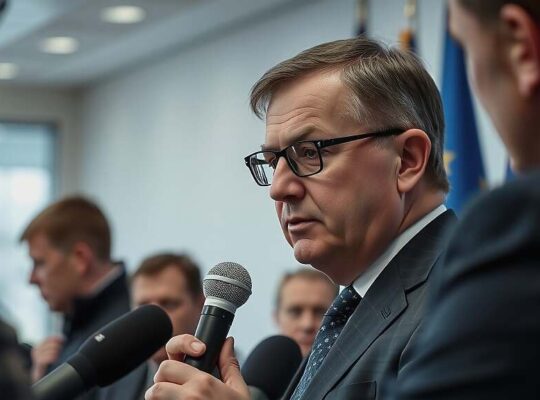
When pressed by the dts Nachrichtenagentur to ascertain whether Chancellor Friedrich Merz shared the optimism expressed publicly, Deputy Government Spokesperson Sebastian Hille offered a carefully worded statement. While acknowledging Merz’s inherently optimistic disposition, Hille emphasized that this optimism operates within a framework of pragmatic realism, particularly when navigating challenging circumstances. He subtly distanced the German position from the overtly positive assessments emanating from Florida.
Hille pointed to a Ukraine summit, convened in Berlin just over a week prior, initiated by Chancellor Merz, as evidence of Germany’s ongoing commitment to a peaceful resolution. He reiterated the shared objective – a “just and lasting peace” – and framed all diplomatic engagements as contributing toward that goal. However, the lack of specific endorsement for the advancements touted by Trump and von der Leyen suggests a considerable gap in understanding regarding the state of negotiations.
Trump’s assertion of “significant progress” towards ending the war, coupled with Zelenskyy’s references to advancements in security guarantees and von der Leyen’s commendation of “good progress” stands in contrast to behind-the-scenes reports indicating persistent and substantial disagreements, especially concerning Russia’s demand for Ukraine’s withdrawal from the entire Donbass region. Sources familiar with the ongoing negotiations suggest considerable distance remains between the parties on this critical point.
This divergence in public messaging sparks concern about potential strategic differences between the US and German approaches to resolving the conflict. While both nations publicly express a desire for peace, the lack of explicit German backing for Trump’s pronouncements raises questions about the extent to which Berlin perceives genuine movement towards a negotiated settlement, or whether it views the current optimism as premature and potentially detrimental to a realistic assessment of the challenges. The cautious response from Berlin underscores the complexities and potential pitfalls of mediating a conflict where fundamental geopolitical interests remain sharply contested.