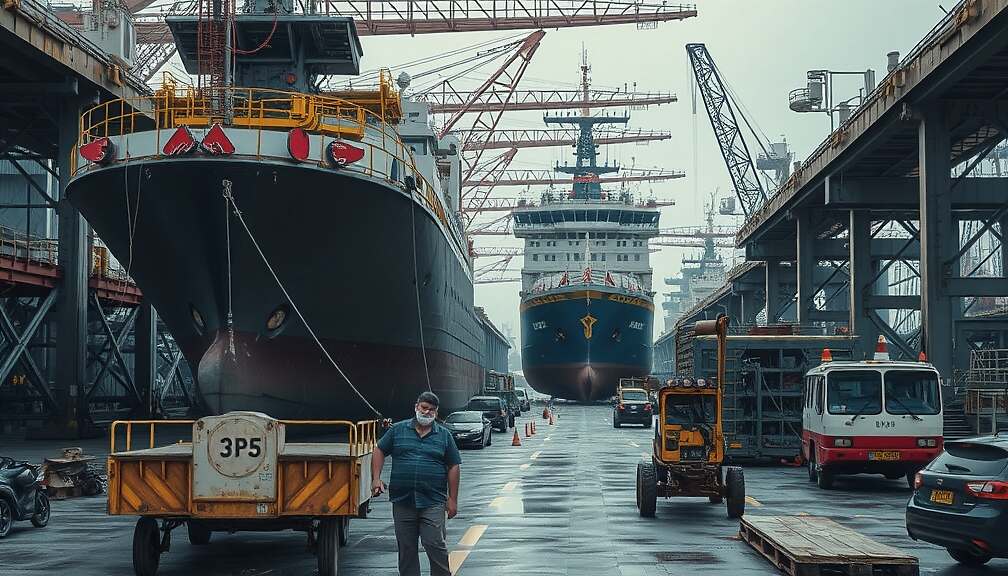
The Papenburger Meyer Werft, a cornerstone of Germany’s shipbuilding industry, faces a protracted restructuring process despite recent contract successes, according to statements released to regional newspapers. While the yard secured a landmark €10 billion order from MSC Cruises in December, encompassing the construction of four ships with an option for two more by 2035, the path to stabilization remains challenging.
Restructuring efforts, spearheaded by appointed supervisor Ralf Schmitz and managing director Bernd Eikens, are currently estimated to be between 30 and 40 percent complete. The immediate focus is not solely on fulfilling the lucrative MSC contract, but on fundamentally overhauling operational inefficiencies that plagued the yard prior to the recent boost in orders. Schmitz highlighted a deeply ingrained reliance on antiquated, paper-based processes and outdated IT systems within the commercial sector, hindering even basic monthly financial reporting. Furthermore, the lack of automation in critical areas such as component delivery and inventory management has contributed to significant operational bottlenecks.
The fragmented nature of data across different departments, stemming from a lack of integrated software solutions, has reportedly led to discrepancies in internal reporting, a problem slated to be addressed by the implementation of a company-wide SAP system, a project not anticipated to be finalized until mid-2027. This delay underscores the scale of the digital transformation required.
Despite the difficult challenges, management insists that job security remains a priority. The yard currently employs approximately 3,200 individuals, a number expected to remain stable, with potential capacity building in specific areas. This commitment contrasts sharply with the underlying financial realities; Schmitz acknowledged inheriting “highly deficit-laden” contracts, including work related to offshore platform components for the Spanish shipyard Dragados and specialized naval vessels, contributing to substantial losses.
The situation raises questions regarding the oversight of previous management decisions and the long-term sustainability of the yard’s portfolio. While the MSC contract offers a vital lifeline, the accumulated losses and the extensive restructuring program point to a deeper systemic fragility within the Meyer Werft, demanding careful political and economic consideration as Germany navigates its industrial future. The timeline for complete stabilization, currently set for 2028, appears ambitious given the depth of the required reforms and the legacy of prior, problematic contracts.