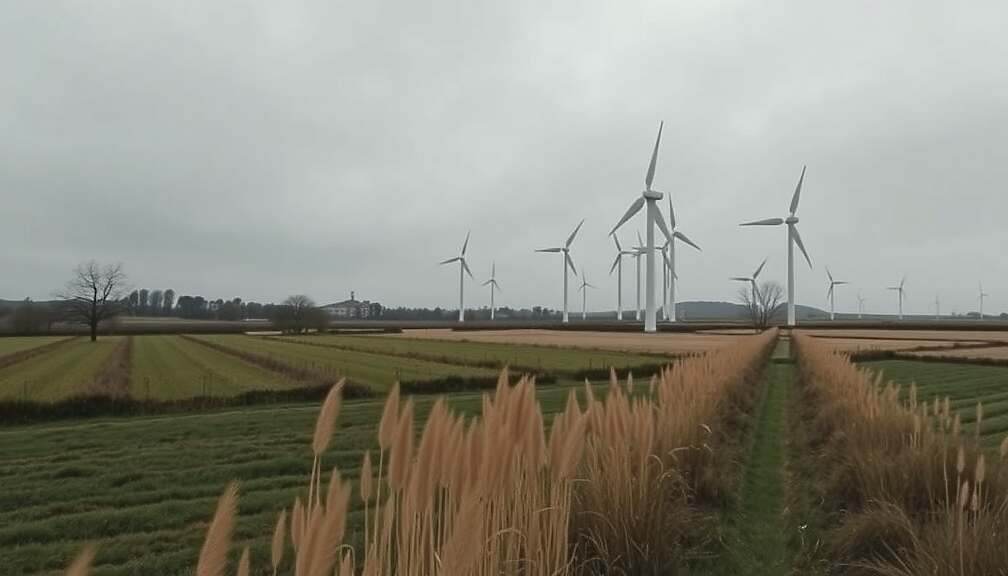
The German Defense Ministry is escalating a growing tension between renewable energy expansion and national security, asserting a crucial need to exert oversight on wind turbine construction to safeguard air defense radar functionality. Concerns are mounting that wind turbines erected within the operational range of early warning radars (LVR) can reflect radar waves, generating deceptive “false echoes” that obstruct the detection of aircraft and potentially compromise airspace security.
This intervention arrives against a backdrop of heightened geopolitical instability, with the Ministry citing an increasing threat from drones and airspace violations within European nations. Current legal frameworks, they argue, inadequately guarantee the “unrestricted functionality” of these vital radar systems, necessitating a legislative amendment to address the issue.
As part of a proposed overhaul of the Bundeswehr procurement acceleration law, the Ministry seeks to empower the Federal Office for Infrastructure, Environmental Protection and Services of the Bundeswehr to determine the permissibility of new wind farm projects. This agency would effectively gain veto power, causing immediate alarm within the wind energy sector.
Industry representatives, including Wolffram Axthelm, CEO of the German Wind Energy Federation, warn that this policy shift could trigger widespread uncertainty and severely impede the rollout of new wind energy facilities. The proposed rule would subject approximately one-third of Germany’s territory to regulatory review, disrupting regional planning initiatives and potentially derailing locally approved development plans.
While the Ministry’s position underscores legitimate security concerns, it risks triggering a significant policy clash. Negotiations are currently underway between defense and energy experts from both the conservative CDU/CSU and the Social Democratic Party (SPD), alongside the Ministry, in a bid to find a compromise. SPD parliamentary group’s energy policy spokesperson, Nina Scheer, has urged policymakers to acknowledge the warnings from the wind energy sector, advocating for a recognition of the energy transition as a matter of national security itself. “Our energy acquisition must be considered part of what we are protecting” she stated, highlighting the interconnectedness of defense capability and sustainable energy infrastructure. The delicate balance between rapidly accelerating renewable energy targets and maintaining robust national defense capabilities is now poised to become a defining challenge for the German government.