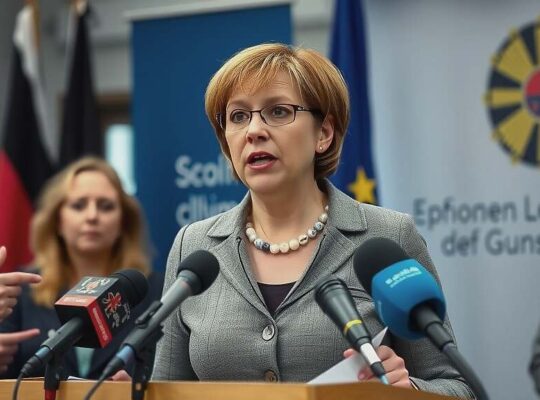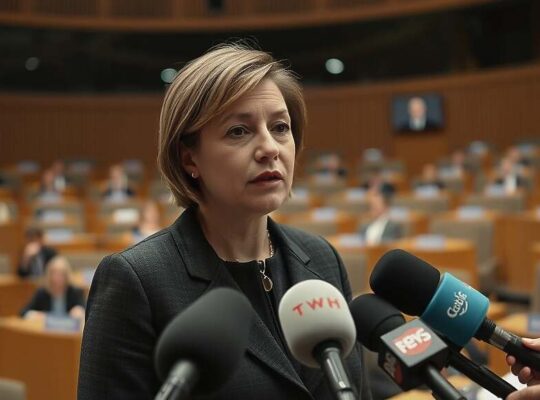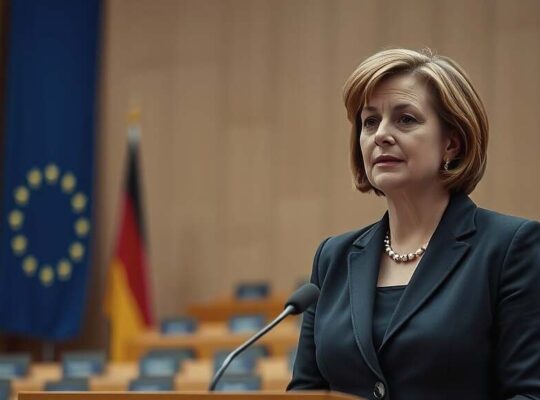
The German government faces a precarious moment as Housing Minister Verena Hubertz, of the Social Democratic Party (SPD), is set to interrupt her maternity leave to participate in a critical vote on the controversial pension reform package. A spokesperson for the ministry confirmed to “Focus” magazine that Hubertz is “expected to take part” in the vote despite having officially entered her parental leave just last week.
This unprecedented move underscores the fragility of the coalition government’s position as it attempts to secure passage of the reform. The “twelve-vote majority” initially projected for the bill is now reportedly threatened, primarily due to internal dissent within the conservative Union faction, specifically from the “Junge Union” youth wing, which fundamentally opposes the substance of the proposed legislation.
The decision to summon Hubertz back to parliament highlights the lengths to which the coalition is willing to go to secure the necessary votes. Critics are already raising concerns about the optics of prioritising political expediency over established parental leave policies, questioning whether it sets a problematic precedent.
Beyond the immediate political maneuvering, the situation throws into sharp relief the deep divisions within both the Union and SPD regarding the pension reform. The bill itself remains heavily contested, sparking widespread public debate and criticism from various sectors. Its passage is not assured and the intervention of a minister returning from maternity leave underscores the high stakes involved and the potential for further instability within the German political landscape. The move also raises broader questions about the government’s ability to effectively govern and maintain unity amidst such significant internal disagreements.