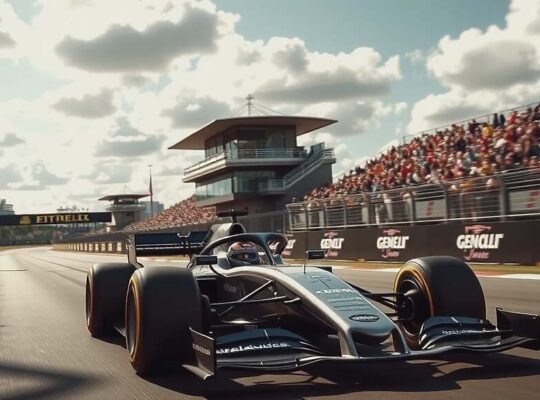
The culmination of a fiercely contested Formula 1 season saw a surprising shift in power dynamics in Abu Dhabi on Sunday, as McLaren’s Lando Norris clinched the World Championship. The young Brit secured a third-place finish, enough to surpass reigning champion Max Verstappen by a mere two points, marking a significant upset for the dominant Red Bull Racing team. McLaren’s Oscar Piastri further solidified the team’s unexpected triumph by claiming second position, completing a podium sweep that signals a potential reshaping of the sport’s competitive landscape.
The race began with Verstappen, starting from pole position, asserting immediate control, a familiar sight throughout the season. Norris, positioned second, initially faced strong challenge from Ferrari’s Charles Leclerc, demonstrating the precariousness of his championship aspirations. While Verstappen led with apparent ease for much of the race, the critical factor proved to be the consistently strong performance of McLaren. Their strategic decisions and Norris’s measured drive capitalized on Verstappen’s need to secure maximum points, indirectly contributing to his own championship victory.
The unexpected result casts a long shadow over Red Bull’s previously unchallenged reign. Analysts are now questioning whether the team’s development stagnation contributed to Verstappen’s inability to secure the title, while simultaneously praising McLaren’s marked improvement throughout the season. The team’s resurgence, powered by strategic overhauls and driver advancements, suggests a fundamental shift in the technological and competitive balance within Formula 1.
Beyond the championship race, the performance of other teams also highlighted critical narratives. Ferrari’s Charles Leclerc secured fourth place, a respectable finish but further underlining questions about their consistent challenge to the frontrunners. Mercedes, represented by George Russell, showed limited progress, drawing scrutiny regarding their ongoing engineering restructuring. The veteran presence of Fernando Alonso (Aston Martin) and Esteban Ocon (Haas) added a layer of seasoned competition, while the inclusion of Oliver Bearman (Haas) and Nico Hülkenberg (Sauber), securing points for their respective teams, indicated a broader competitive spread within the grid. The future of Formula 1 appears to be undergoing a period of realignment, with McLaren’s victory signalling a welcomed interruption to established power structures and increasing the pressure on existing teams to adapt and innovate.