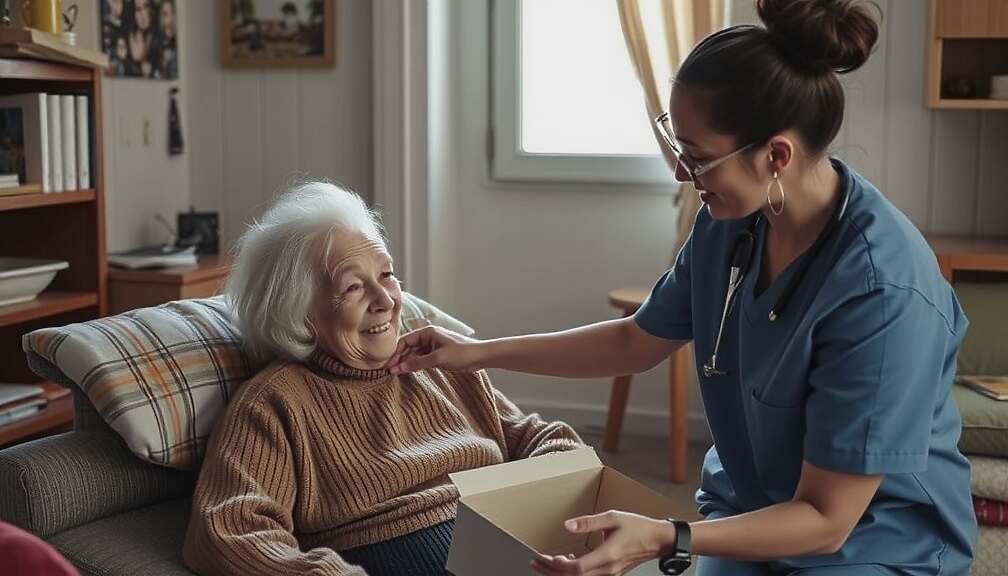
Only a small fraction of people who receive care at home in Germany and who are entitled to social assistance actually obtain it. In contrast, the majority of those cared for in nursing homes receive support when their own contributions are insufficient, a finding reported by “Spiegel” based on a study led by legal scholar and care expert Thomas Klie for the Parity General Association.
In 2023, of the roughly 4.9 million people cared for at home, about 390 000 were in need of “Hilfe zur Pflege” (care assistance) because their income, assets, and the benefits from the nursing‑insurer together fell short of covering their needs. Yet only around 76 000-just under one‑fifth of those entitled-actually received the assistance. These figures come from model calculations that combine nursing‑care statistics with data on basic income for the elderly.
The likelihood of receiving the entitlement is highly dependent on one’s region. In Saarland only about one‑tenth of eligible individuals got help, while in Saxony‑Anhalt the share was a little over one‑fifth. In Hamburg, roughly every third person cared for at home who was entitled to assistance received it. “Today, the postal code determines how well home‑cared recipients are supported” said Joachim Rock, chief executive of the Parity General Association.
The authors caution that their estimates carry substantial uncertainty. Official statistics on home care are scarce, especially when care is performed exclusively or mostly by relatives. Much of this activity falls into a statistical “dark zone” leaving little insight into the financial and social circumstances of the needy and their caregivers.
Nevertheless, official data confirm that many home‑cared individuals do not receive the assistance they are entitled to, and that the gap varies widely by location. In Berlin and Hamburg, 45 % and 42 % respectively of care recipients receiving social assistance are cared for at home, whereas in all other states the share ranges from 9 % to 23 %. In response, the Parity General Association is calling, among other measures, for more intensive counseling for people receiving home care.