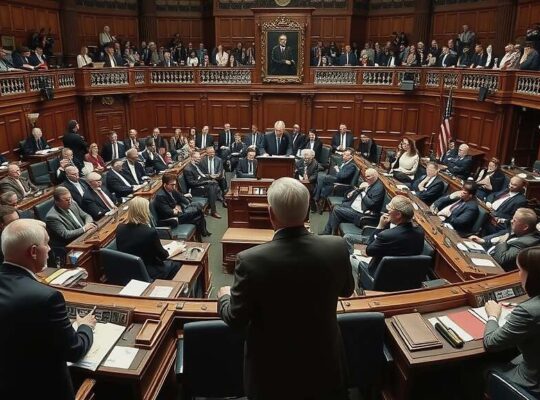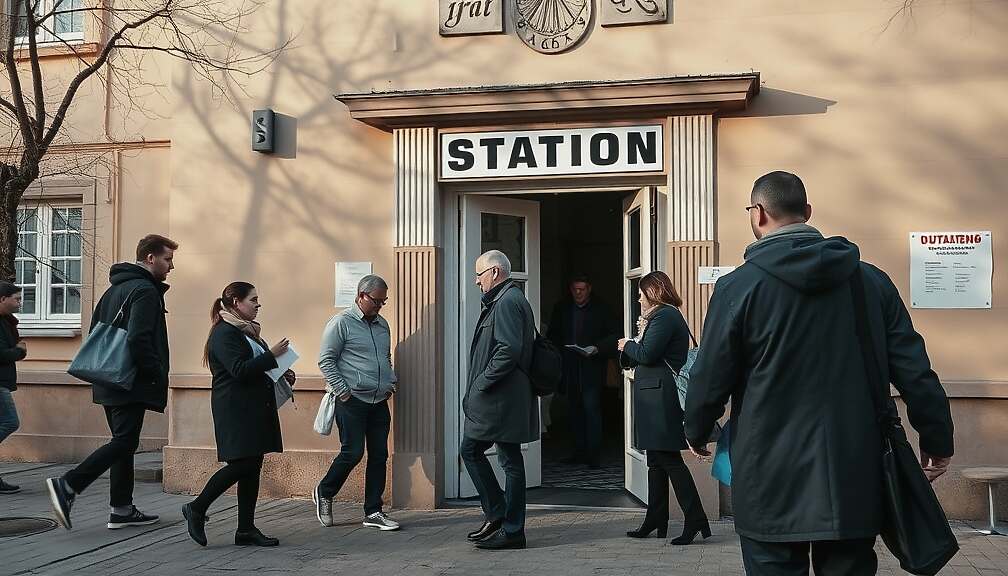
Hungary has begun its much-watched parliamentary election, an important vote that could see Prime Minister Viktor Orbán lose power for the first time in sixteen years. Polling stations opened on Sunday morning and are scheduled to close at 7 PM, with preliminary results anticipated around 8 PM.
The election carries significant weight for the European Union, as Orbán frequently finds himself at odds with the EU Commission and other member states on various issues. Critics accuse the current Prime Minister of steering Hungary toward becoming an “illiberal democracy” through an authoritarian drift. His main challenger, Peter Magyar, a former member of Orbán’s Fidesz party, has positioned himself as a figure promising political reform and a decidedly pro-Western direction.
Currently, poll averages indicate that the conservative opposition party, Tisza, led by Magyar, is significantly ahead of Fidesz. An estimated 8.1 million eligible voters are called to the polls.
The underlying Hungarian electoral system is a complex blend of majority and proportional voting elements, which means a change in power remains uncertain even if Tisza secures a lead in the polls. However, should Tisza achieve a two-thirds majority, the victory could enable fundamental changes, such as the release of blocked EU funding. Because the political focus is intensely concentrated on the contest between Orbán and Magyar, the chances for smaller political parties appear limited.