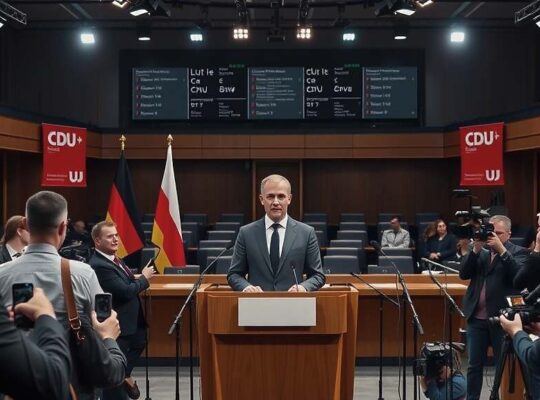
The recent agreement on pension reform within the German coalition government has ignited a contentious debate, with calls for a fundamental restructuring of the social welfare system now emanating from within the ruling conservative ranks. Hessens Ministerpräsident Boris Rhein has publicly acknowledged the merit of the criticisms levelled against the pension package, praising a faction within the CDU/CSU parliamentary group for initiating “an important discussion about pensions”. He urged that this debate now be concretely pursued within a planned pension commission.
Rhein’s vision deviates from the established framework, suggesting an expanded early retirement scheme coupled with incentives for private pension provisions and a system encouraging long-term savings from a young age. He also voiced support for the abolishment of the “Bürgergeld” (Citizens’ Income), advocating a return to a “positive performance culture” and encouraging employment over unemployment.
However, doubts about the efficacy of the commission have been swiftly voiced by business leaders. Steffen Kampeter, CEO of the Confederation of German Employers’ Associations (BDA), expressed skepticism, stating that the foundational errors in policy had already been made and that the commission was unlikely to enact meaningful correction.
The pension package’s impact on the federal budget has further amplified concerns. Economic advisor Veronika Grimm warns that the reforms exacerbate existing financial pressures. Even before the pension agreement, federal revenue in 2029 was predicted to barely cover social spending, defense expenses and interest payments. Grimm considers the accord a “reform in the wrong direction” arguing that the priority should be contained expenditure, not continued expansion. She predicts that the current course of action will inevitably lead to increased payroll taxes, tax hikes and expanded borrowing, ultimately undermining Germany’s economic competitiveness.
Grimm advocates for reforms that address the root causes of the pension crisis, including linking retirement age to life expectancy, indexing existing pensions to inflation rather than wages and reinstating a sustainability factor that accounts for demographic shifts. She also proposed the elimination of the “Mütterrente” (mothers’ pension) and a restructuring of early retirement penalties to ensure actuarial fairness. The increasingly divergent perspectives highlight a deepening split within the governing coalition and raise questions about the long-term sustainability of Germany’s social welfare model.