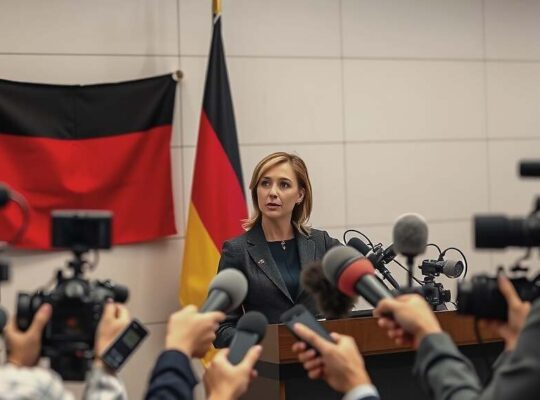
Bundeswirtschaftsministerin Katherina Reiche (CDU) has signalled that the German government will allow industry to emit more CO₂. “We have advised the Commission not to remove further permits from the market, thereby preventing a rise in the CO₂ price” Reiche told the “Bild” (Saturday edition) in reference to the EU Emissions Trading System (EU‑ETS) for the energy and industry sectors. “For now, we need stability across Europe not only during the crisis but also during a period of economic hardship”.
Reiche said the ETS is “under great pressure”. “I hear that the Commission really wants to move” she added.
In the EU ETS for energy and industry, a ceiling is set on CO₂ emissions. Companies must purchase certificates for each tonne of CO₂‑equivalent emitted, for example from burning gas. These certificates are allocated over several years, so the total number of certificates – and therefore allowable emissions – decline each year.
If firms’ demand grows more slowly than the supply of certificates, the price rises. Economic estimates suggest the price would need to climb from about €80 to €200‑€300 in the medium term to fully decarbonise the industrial sector. Keeping the number of certificates constant each year either raises emissions beyond current plans or forces a steeper, shorter‑term reduction later, which could trigger sharp price spikes.
Reiche also wants to continue allocating free CO₂ certificates to firms. She explained that the “urgent request of energy‑intensive companies-from chemicals, steel, paper to cement-needs to secure free allocations not just until the early 2030s but into the 2040s, so they are not further burdened by the CO₂ price”.
According to existing plans, the annual allocation of certificates will fall by 4.4 % per year from 2028, with no new certificates distributed after 2040. Revenue from the first phase of the certificate market (ETS 1) flows into Germany’s Climate and Transformation Fund (KTF), which supports, among other things, the expansion of electric‑charging infrastructure and the acceleration of the hydrogen economy. A continued free allocation would therefore reduce future revenue and, consequently, the funds available to help decarbonise affected industries.