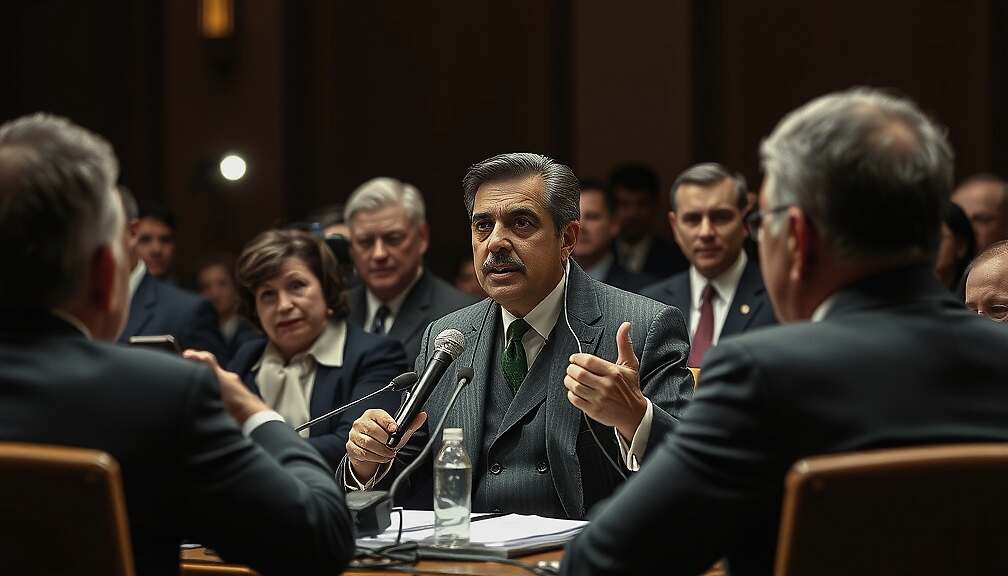
Reza Pahlavi, the exiled eldest son of Iran’s ousted Shah, has called on the United States to launch a swift military strike against Tehran’s regime during the Munich Security Conference, as reported by “Spiegel”. He also says he hopes to return to Iran himself to lead an on‑the‑ground regime change.
Before leaving for Munich, Pahlavi described the blood‑shed protests that erupted after his January appeal as a “revolution”. He lamented that thousands had died, adding that “there is no turning back”. According to him, the regime is weakened, its leadership is hiding in bunkers, and it offers nothing to the people.
Pahlavi claims that the moment has come for a targeted blow against the regime’s enforcers and security forces. He insists that such an action would be “not an external intervention but a humanitarian intervention” and argues that a rapid military strike could halt mass murder and give Iranians a “fair chance”.
His main audience is the advisers of the U.S. president. “Trump has the chance to write history by freeing the Iranian people” he told the news magazine. Pahlavi refers to Trump’s January 13, 2026 remark that “help is on its way” which found resonance in Iran but ultimately yielded no consequences. More than 100,000 regime personnel-both security and administrative-have reportedly contacted Pahlavi’s team in response to his call.
Pahlavi says he intends to act directly in the country. He stated he will “see when I can act in Iran”. He recalled that in 1980 he had offered his service to Khomeini’s air force during the war with Iraq. “I am not a sacrificial lamb” he added; he wants to organize the country’s transition.
In the wake of the regime’s collapse, the opposition leader calls for amnesty for collaborators, and for trials of “demons” such as Khamenei under a Nuremberg‑style model. He says the Iranian people should decide the country’s future-whether a constitutional monarchy or a republic-through a referendum. Pahlavi hopes to unify the fractured opposition using four guiding principles: equality, secularism, democracy, and civil liberties.
He urged participants of the Munich Security Conference to stop backing the regime and to firmly side with the Iranian people. “The freedom movement in Iran needs support-political, economic, and, if necessary, military”.