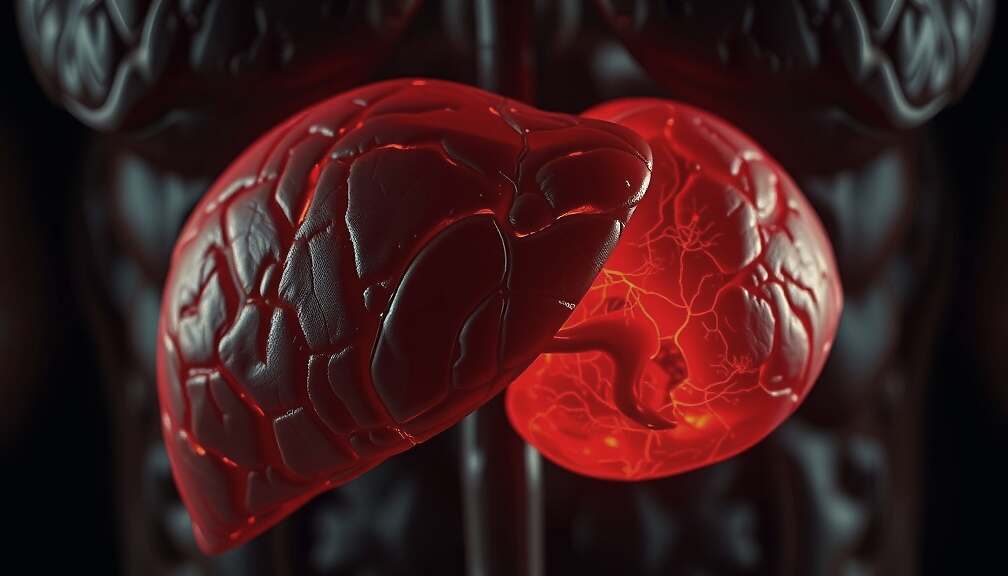
The prevalence of fatty liver disease in Germany is growing, particularly among younger individuals. A special analysis by the Central Institute for Statutory Health Care (Zi), reported by “Spiegel”, shows that among people under 40 years old, the rate of affected individuals increased by 59.5% between 2016 and 2025.
According to the special report, a total of 3.13 million people were recently treated for fatty liver disease, an increase from 2.42 million in 2016. Furthermore, 5.87 million insured individuals received treatment for reflux, representing a 17% jump since 2016. The evaluation also notes that more than seven million statutory health insurance recipients are currently being treated for Type 2 diabetes, with close to 510,000 new diagnoses added annually.
This data is derived from nationwide outpatient billing records of statutory insured persons, meaning it only records doctor visits. Dominik von Stillfried, Chairman of the Zi, explained to “Spiegel” that part of this increase is due to doctors more frequently examining the livers of overweight and diabetic patients today compared to previously. He cautioned that because the figures only track visits, the true number of affected patients is likely several times higher.
These statistics contribute to the current debate surrounding the planned sugar drink tax. A policy paper by the Federal Ministry of Finance states that the tax is intended to help “further consolidate the federal budget,” making no mention of prevention. Von Stillfried pointed to England, noting that the tax has proven effective there, particularly among younger populations who are most susceptible to the rise of fatty liver disease.