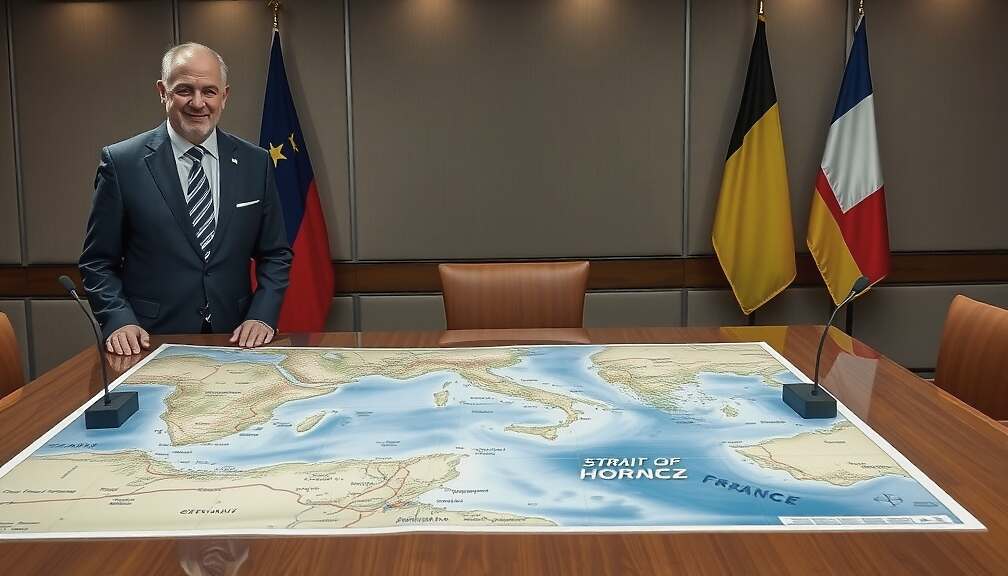
Norbert Röttgen, the CDU foreign‑policy spokesman and deputy chairman of the Union parliamentary group, rejected French President Emmanuel Macron’s proposal to negotiate with Iran over opening the Strait of Hormuz.
Röttgen told the “FAZ” that controlling the strait is a strategic determinant of victory or defeat in the war and that Iran’s claim to command the entire waterway is contrary to international law. He argued that Macron’s offer effectively recognizes Iranian supremacy in military, legal and eventually political terms, and that what Iran would truly reject in a state of total military pressure is a capitulation.
He also supported German involvement in a post‑war effort to secure the strait after the United States and Israel conclude hostilities with Iran. “Almost the whole world, including Germany, cannot accept Tehran’s hold over twenty percent of global oil and gas traffic as if it were a hostage situation” said the Christdemocrat.
Röttgen added that, once President Donald Trump declares the war against Iran over, Germany will have to decide its own stance. “Opening the Strait of Hormuz is a major concern for many countries-including Germany, which has both economic and political interests that must be pursued jointly”.
Regarding the post‑conflict military role, Röttgen sees it largely with the United States: “The region’s basic security after the fighting ends must be provided by America”. He warned that new regional dynamics will emerge, with Gulf states reorganising their security, and urged Germany to actively contribute to stability and safety in the area.
Finally, Röttgen said that for the US president it is crucial to demonstrate domestically that other states share the burden. Trump faces significant domestic pressure from the war, and he must prevent Tehran from controlling the strait; otherwise, the United States’ role in the world after such a strategic defeat would be diminished, and Europeans would likely hold no interest in a weakened U.S. position.