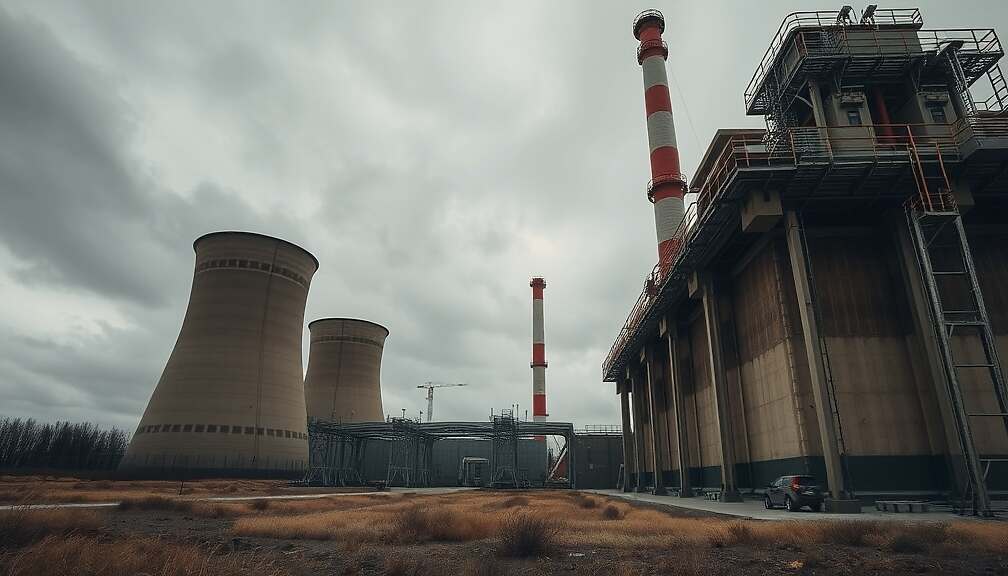
Germany’s largest power producer, RWE, is escalating pressure on the federal government to swiftly initiate a tender process for natural gas-fired power plants, arguing it’s a critical prerequisite to achieving the nation’s 2030 coal phase-out commitments. In an interview with the “Rheinische Post”, RWE CEO Markus Krebber articulated the company’s ambitious plans, emphasizing the necessity of a tender announcement by the first quarter of 2026 to ensure the commissioning of the first gas-fired blocks by the end of 2029.
While the Federal Ministry for Economic Affairs and Climate Action is reportedly working diligently on the preparatory steps, Krebber highlighted the considerable hurdle of securing EU approval for these plans, suggesting a potential bottleneck in the implementation process. The urgency stems from RWE’s commitment to phasing out coal-fired operations in North Rhine-Westphalia (NRW) by 2030 and the proactive development of three gigawatts of new gas-fired power plant capacity despite prevailing political ambiguity.
However, RWE’s strategy reveals a complex balancing act. Krebber signaled the company’s willingness to potentially extend the operational life of the Garzweiler open-pit mine beyond its current scheduled closure, contingent on specific conditions. These include a governmental review of the coal phase-out date in 2026, with the possibility of a three-year extension for the remaining power plants to serve as reserve capacity. Critically, Krebber stipulated that the state would be responsible for financing this reserve capacity and procuring the necessary CO2 certificates, essentially assuming significant financial liabilities beyond the initial phase-out timeline.
The shifting landscape is also impacting RWE’s workforce, with the company proactively managing potential job losses associated with the coal phase-out. Rather than recalling retired employees, RWE envisions a gradual reduction from its current 6,000 brown coal employees to approximately 2,000 by 2030, partially facilitated by the phasing out of adjustment payments for retirees.
Beyond the immediate timeline, Krebber’s statements expose a series of demands aimed at fostering investor confidence. He advocated for a streamlined tender process, free from prescriptive timelines regarding the transition from natural gas to green hydrogen – arguing the market should dictate the pace of this shift. Furthermore, he stressed the need for investment security, proposing a minimum guaranteed remuneration for these gas-fired units to account for their role as backup power when renewable sources are unavailable. This underscores a recognition that the economics of these plants depend on infrequent and crucial operational periods, necessitating government intervention to ensure profitability and incentivize participation in the tender process. The implicit message is clear: achieving Germany’s climate goals requires substantial financial and regulatory support for the energy transition, even if it necessitates extending the reliance on fossil fuels for a defined period.