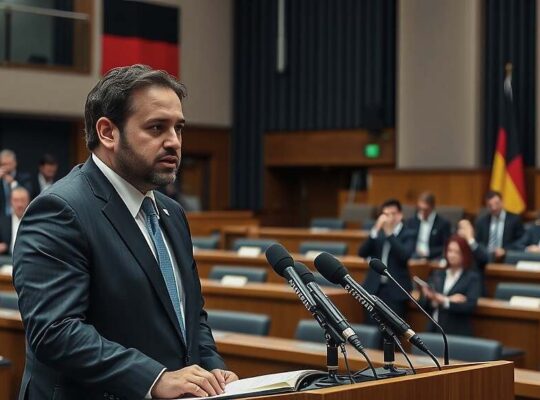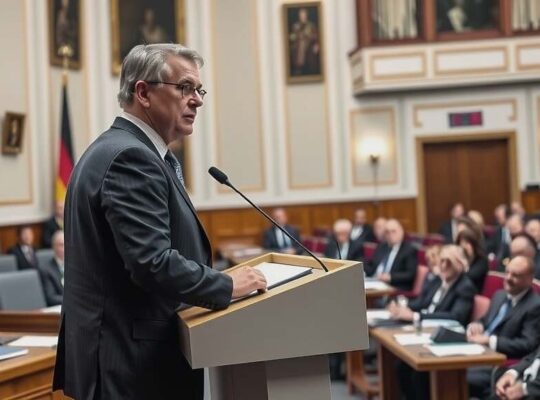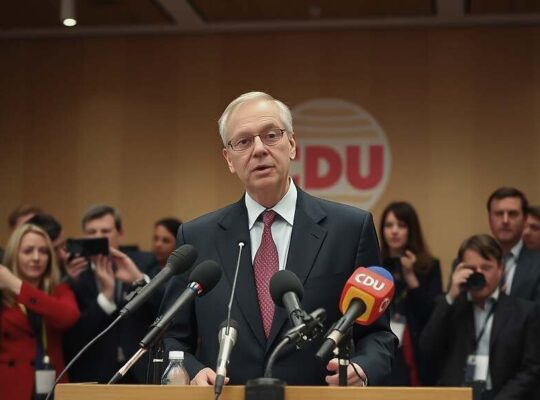
The governing coalition in Saxony-Anhalt, comprised of the CDU, SPD and FDP, has formally cleared the path for a leadership transition in the state, setting the stage for a potentially delicate period ahead of upcoming elections. Sven Schulze, currently the CDU’s state leader and Minister for Economy, is poised to succeed the long-serving Reiner Haseloff as Minister President, with a vote scheduled for late January in the Magdeburg state parliament.
The move, approved unanimously by the governing parties’ respective committees on Monday, marks a significant shift in Saxony-Anhalt’s political landscape. While presented as a seamless handover, it raises questions about the true impetus behind Haseloff’s decision and the future direction of the state.
Haseloff, who has held the position since 2011 and represents Germany’s longest-serving state leader, announced his intention to step down prior to the September state election, contingent on the continuation of the existing coalition and the preservation of its agreed-upon framework. This condition, while appearing routine, subtly highlights the precarious nature of the coalition and potentially indicates internal pressures that made his continued leadership untenable.
Observers note that Haseloff’s earlier declaration in 2023, explicitly naming Schulze as his successor and affirming his own non-participation in the 2026 election, suggests a planned and deliberate succession, rather than a sudden or reactive decision. However, the timing of the transition, so close to the election, invites scrutiny. Some political analysts suggest this maneuver is an attempt by the CDU to refresh its image and distance itself from potential voter fatigue surrounding Haseloff’s lengthy tenure, particularly given lingering concerns about economic performance and social development within the state.
The unanimous backing for Schulze across all three coalition factions underscores an apparent consensus, yet the rapid sequence of approvals raises questions about the degree of genuine debate or alternative considerations within the parties. The FDP’s endorsement, arriving later in the evening, adds a layer of procedural formality without necessarily guaranteeing widespread enthusiasm for the transition.
While the coalition is publicly portraying the change as a positive step towards renewed energy and momentum, the underlying implications of Haseloff’s departure and the choice of Schulze will be carefully watched as the state approaches a crucial election cycle. The success of this transition and the stability of the coalition, will ultimately depend on Schulze’s ability to navigate the complex political landscape and address the challenges facing Saxony-Anhalt.