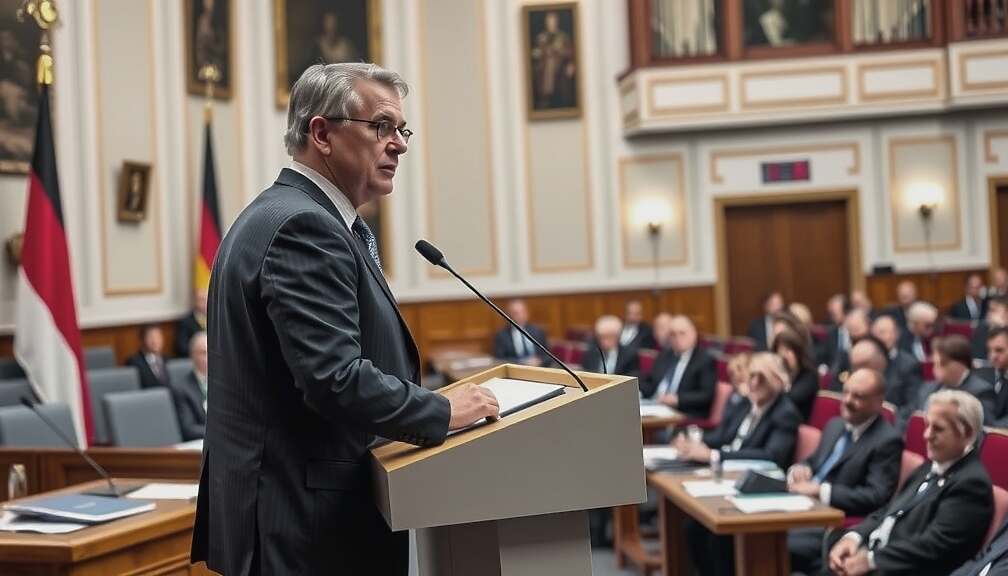
to keep the current traffic‑light coalition-comprising the SPD, the Greens, and the Free Democratic Party (FDP)-in power after the March election.. He links his ambition directly to his office as head of state.
In a recent podcast with the magazine Politico, Schweitzer said, “I enjoy working with my traffic‑light government”. He recalled that the first such coalition in Rhineland‑Palatinate “worked, held together, stayed in office for a long time-ten years now”. Although critics have often labelled the government “boring” he considers the epithet an honor and declares that “I am not afraid to be seen as unexciting”.
He acknowledges that the three‑party alliance does not yet have an outright majority in current polls. “Yes, the FDP is having a difficult time at present” he noted, but added, “the FDP can still pull through. They have been written off before and have come back”. Schweitzer was calm when discussing figures, citing a Rhineland‑Palatinate trend: the SPD typically trails the CDU before state elections and then pulls ahead in the polls. He made it clear that he will not take on the role of a junior partner. “I am Minister President. That is what I bring to the table. I remain Minister President or I do not; there is no in‑between”. He urged voters who want him to keep leading to vote the SPD first.
Schweitzer did not explicitly decline working with the Left Party, but he expressed strong doubts about the left gaining seats in the state parliament: “I am deeply convinced that the Left Party will not get into the Rhineland‑Palatinate state parliament”. In contrast, he made working with the Alternative for Germany (AfD) “immediately excluded”. He said Rhineland‑Palatinate would be best served by “a strong majority of the democratic centre”.
In a conciliatory tone, Schweitzer praised CDU politicians at the federal level. He commended the Federal Chancellor for “doing a good job in foreign policy in Europe” and wished him success in domestic policy. “I would only wish that he were equally successful in domestic affairs as he is in Europe” he said. Schweitzer also lauded a few federal ministers for their constructive approaches to digitalisation and state modernisation.
Regarding inheritance tax, he described it as a “justice issue” while emphasising the need for middle‑enterprise‑friendly solutions. However, he rejected tax relief that lacked counter‑financing, stating, “Those who provide relief must also answer the financing question; otherwise, no effective measure will come out”.