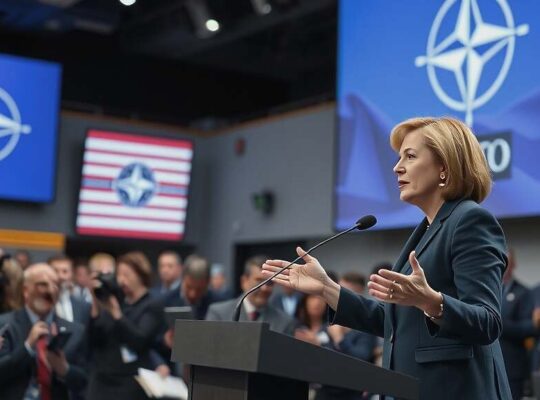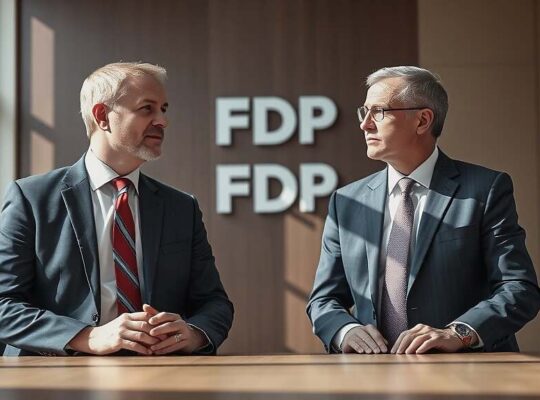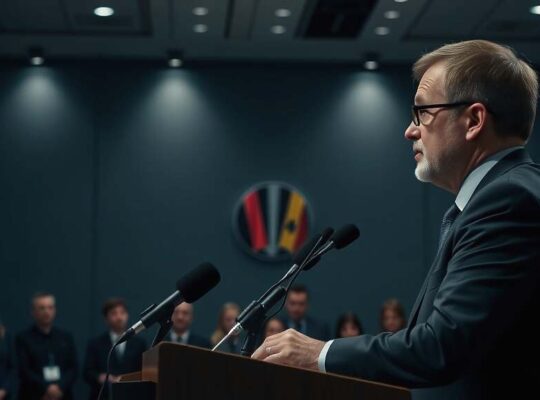
The decision to extend invitations to representatives of the Alternative für Deutschland (AfD) to participate in the 2026 Munich Security Conference has drawn considerable scrutiny, a situation defended by outgoing Conference Chair Wolfgang Ischinger as a necessary measure to avoid fueling the party’s narrative of victimhood. Speaking to T-Online, Ischinger emphasized the Conference’s role as a premier international forum for dialogue, asserting that it is a function of the institution to represent a broad spectrum of international perspectives, even those sharply opposed.
Ischinger underscored the Conference’s historical precedent for facilitating discussions between adversaries, citing examples of mediated dialogues between Serbia and Kosovo, Azerbaijan and Armenia and, crucially, Israel and Saudi Arabia. He characterized this engagement as fundamentally embedded in the Conference’s operational DNA – an effort to identify potential resolutions despite deeply entrenched conflicts.
However, the invitation – and Ischinger’s justification – raises questions about the appropriate platform for challenging the AfD’s increasingly contentious political positions. The former diplomat acknowledged that the AfD’s security policies are “completely wrong” and detrimental to German interests, yet he maintains that the invitation policy of a private organization should not be the vehicle for direct political confrontation. He clarified that public appearances by AfD figures on the Conference’s stages are not anticipated.
The core of the debate extends beyond a simple logistical decision. Critics argue that providing a platform, even under the guise of facilitating dialogue, risks legitimizing a political party that has been accused of espousing extremist views and undermining democratic norms. Ischinger’s call for other political parties to “place the AfD in a factual and political context” instead of relying on the Security Conference’s invitation policy suggests a broader responsibility for countering the party’s influence, placing the onus on mainstream political actors to actively dismantle its appeal and effectively marginalize its ideology through substantive policy debates and robust public engagement. The episode highlights a complex tension: balancing the imperative of open dialogue with the need to actively challenge policies deemed harmful to democratic values.