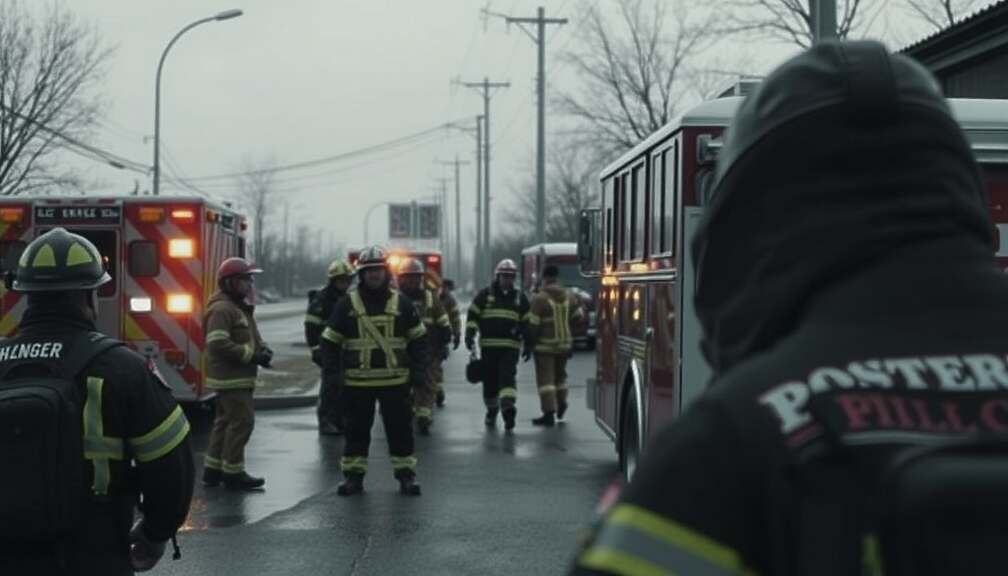
A proposal to significantly bolster the safety of emergency responders – firefighters, paramedics and police officers – is gaining traction within German federal and state discussions, sparking debate about the balance between individual driver freedom and the protection of those risking their lives on the front lines. The initiative, originating from Schleswig-Holstein and now before the Länderkammer for potential deliberation in January, advocates for a revision of the Straßenverkehrsordnung (Road Traffic Act) to mandate slower speeds near accident and emergency scenes.
The crux of the proposal focuses on addressing the considerable risk posed to emergency personnel by motorists approaching incident sites at excessive speed. Within urban areas, the proposed law would stipulate adherence to pedestrian walking speed (“Schrittgeschwindigkeit”) when passing emergency operations. Outside of urban environments, it proposes a mandatory lane change, if feasible, in addition to a substantial reduction in speed.
The Deutsche Feuerwehrverband (German Fire Brigade Association) has voiced strong support for the initiative. President Karl-Heinz Banse highlighted the unacceptable reality faced by firefighters often risking their own safety due to reckless drivers. “Those risking their lives to rescue individuals trapped in accidents should not themselves be endangered by careless motorists” he stated, stressing the paramount need for legislative action.
However, the proposal is not without potential pitfalls and underlying structural challenges. While lauded by the Feuerwehrverband, Banse emphasized that legal frameworks alone will be insufficient. Effective enforcement requires a considerable investment in police resources – ensuring adequate manpower to monitor compliance and deter violations. Furthermore, the judicial system’s capacity to process and adjudicate such cases efficiently will be crucial in establishing a credible deterrent.
Critics are likely to focus on the potential for increased traffic congestion and the practical difficulties of enforcing such strict speed limits across diverse road conditions. The proposal forces a reckoning regarding resource allocation – a question of prioritizing the safety of first responders against potential inconvenience for drivers and highlighting underlying anxieties surrounding the capacity of Germany’s judicial and policing infrastructure to respond to evolving demands. The impending discussion in the Länderkammer will undoubtedly reveal the complexities inherent in balancing public safety with individual liberties and the enduring need for investment in crucial support systems.