Armin Willingmann, the SPD’s top candidate for the state elections in Saxony-Anhalt, has publicly criticized past failings in the implementation of the energy transition, expressing concern over the significant disadvantage faced by East Germany. According to the Economy and Energy Minister of Saxony-Anhalt, several crucial errors have been made during the process. He pointed out that one of the most substantial mistakes was offloading the costs of grid expansion onto consumers in the developing regions via their electricity bills.
Willingmann noted that this led to a perception in Eastern Germany where wind farms were being built, but the profits flowed to Western investors, whose electricity was used elsewhere, while local residents ultimately bore the network fees-a burden he felt was particularly severe for southern German states that he claimed were undermining the energy transition. He argued that this perception severely damaged acceptance of the policy. Looking back, he suggested that grid expansion should have been financed as state infrastructure from the very beginning.
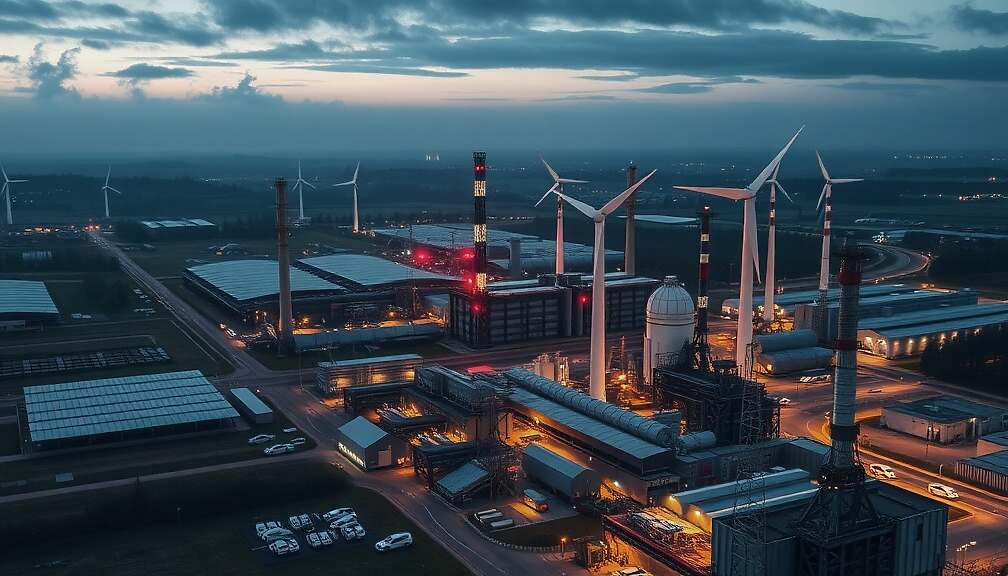
Indeed, for a long period, the costs associated with the operation and expansion of power grids were predominantly passed onto power consumers through regional network charges. States that saw strong growth in wind and solar power, such as Saxony-Anhalt, Brandenburg, and Mecklenburg-Vorpommern, were especially affected. To alleviate this burden, a nationwide balancing mechanism was initiated in early 2025, which partly distributes some of these disproportionately high network costs across all electricity consumers in Germany.
Despite these criticisms, Willingmann defended the continued expansion of renewable energy sources. He highlighted that local communities in Saxony-Anhalt are now able to benefit directly from wind turbines thanks to the state’s acceptance and participation law, noting that a single turbine can bring a municipality approximately €27,000 annually-a difference that is significant for many smaller communities.
Furthermore, the minister sharply criticized the AfD’s anti-wind power policies. According to Willingmann, such policies strip municipalities of a secure and sustainable source of income and incorrectly deny that these “local energies” serve vital purposes, including ensuring supply security, maintaining reasonable prices, and achieving climate protection goals.