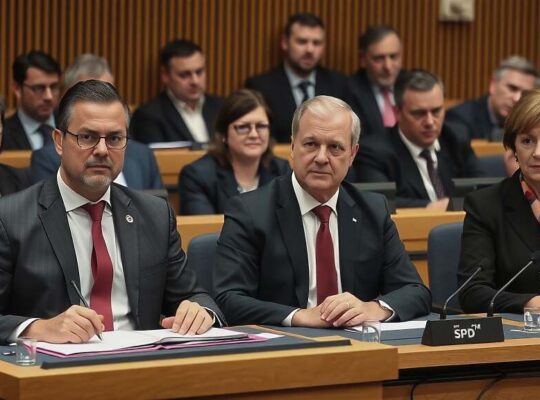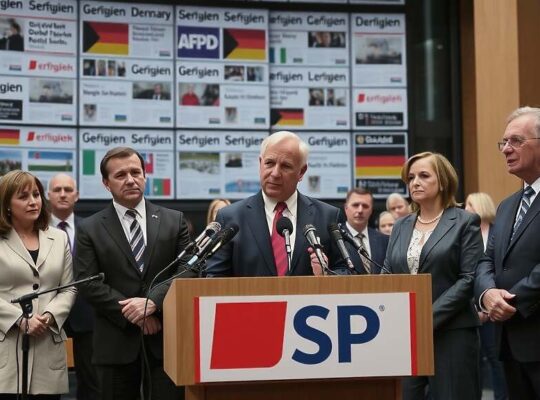
The Social Democratic Party (SPD) is signaling a long-term strategy focused on stability and reform, downplaying immediate ambitions for the chancellery while simultaneously pushing forward contentious welfare reforms. Dirk Wiese, parliamentary manager of the SPD parliamentary group, staunchly defended the decision by party leader Bärbel Bas to forego a candidacy for chancellor, framing it not as a lack of ambition but as a deliberate prioritization of her responsibilities as Federal Minister of Labor.
Wiese’s comments to Politico suggested Bas’s focus remains firmly on crucial labor reforms and preparations for 2026, implying a deliberate distancing from the high-pressure demands of a national campaign. While he left the door technically open to personal political aspirations – stating that “one should never rule anything out in politics” – he swiftly clarified that he had no current plans to challenge the incumbent’s succession, referencing his Sauerland colleague. This appears intended to quell speculation and reassure the public of party unity.
The official line from the SPD is clear: the party’s sights are set on producing the next chancellor, but not until 2029. This extended timeline allows the current coalition government, fragile as it is, to consolidate its position and address pressing economic and social issues. Wiese emphasized that personnel discussions are secondary to the imperative of governance, highlighting the party’s desire to avoid distractions.
Beyond immediate electoral considerations, Wiese signaled a rapid acceleration of reforms to the Bürgergeld (citizen’s allowance) system. The planned restructuring, he stated, will be swiftly brought before the Bundestag and is expected to incorporate stricter sanctions for refusing employment and enhanced support for reintegrating individuals into the workforce. This commitment likely aims to address growing public concern over welfare dependency, though critics argue the proposed measures risk pushing vulnerable citizens further to the margins and could face significant opposition within the coalition. The push indicates a willingness within the SPD to confront politically sensitive issues, even at the potential cost of alienating some segments of its traditional base.