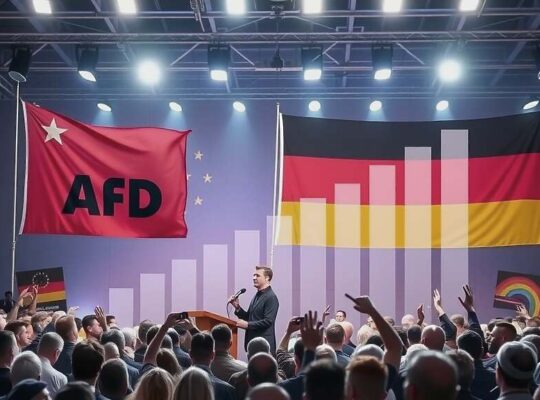
The clear rejection of cooperation with the Alternative for Germany (AfD) by North Rhine-Westphalia’s Interior Minister Herbert Reul has been lauded by leading figures within the Social Democratic Party (SPD). Dirk Wiese, the First Parliamentary Managing Director of the SPD parliamentary group, hailed Reul’s stance as reflective of a consensus across the political spectrum regarding the unacceptability of partnering with a party deemed “securely right-wing extremist.
Wiese’s comments, published in the Handelsblatt, underscored a deepening political divide, with the SPD politician characterizing the AfD not as a conventional opposition but as a fundamental threat to Germany’s societal cohesion and democratic values. He argued that the party’s objectives directly contradict core principles, questioning the very foundations of German society and its place within Europe and the wider global order.
“The AfD is not a normal political opponent” Wiese stated emphatically. “Their goals betray everything we hold sacred: the unity of society, the importance of democracy as a historical achievement and European unity as a basis for our economic success in an era defined by the challenges posed by leaders like Trump, Xi Jinping and Putin.
Wiese’s assertions escalated the criticism, alleging that AfD politicians prioritize personal power and undermine democratic institutions and suggesting their political agenda is influenced by foreign entities. This accusation, implying foreign interference in German politics, adds a significant layer of political tension.
Crucially, Wiese expressed confidence that Reul’s position and his own assessment are broadly shared, extending beyond the SPD to encompass a substantial majority within the conservative CDU and CSU parties. This suggests a potential chasm within the conservative bloc regarding future coalition possibilities and highlights the increasing pressure on mainstream parties to unequivocally distance themselves from the AfD’s increasingly radical rhetoric and policies. The comments reinforce a hardening of political lines and potentially foreshadow further debates about the boundaries of acceptable political cooperation within the German parliament.