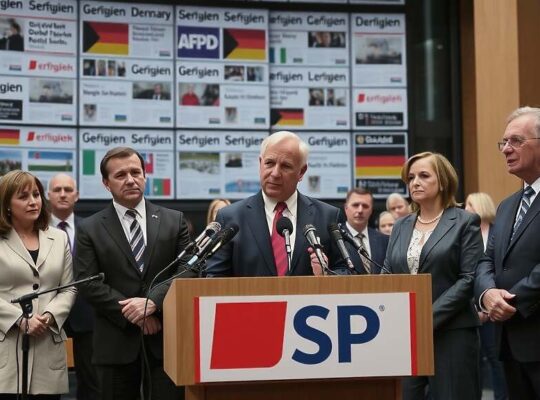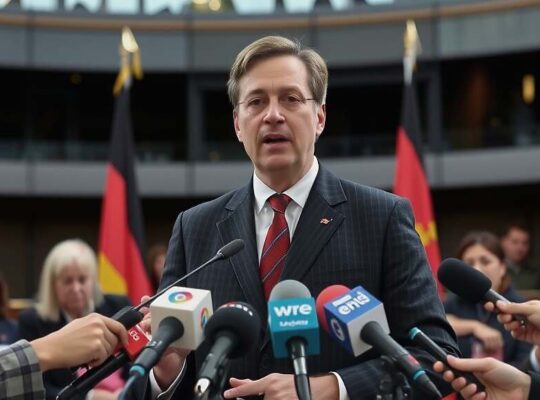
The German Social Democratic Party (SPD) has issued a stark rebuke of a recent communication from Chancellor Olaf Scholz and the Christian Democratic Union (CDU) leader Friedrich Merz, signalling a potential rift within the governing coalition. Miersch, the SPD parliamentary group leader, criticized the letter’s singular focus on bolstering economic competitiveness by 2026, arguing it neglects crucial social policy considerations.
Speaking to the Redaktionsnetzwerk Deutschland, Miersch emphasized that sustained economic viability is inextricably linked to fair labor practices, stable wages and robust social reforms. He cautioned against a strategy prioritizing growth at the expense of worker protections, innovation incentives, investment promotion and a reinforced social safety net. “Competitiveness is only achieved with tariff loyalty, stable wages and functioning social reforms” he stated, directly challenging the underlying assumptions of the CDU’s outlined plan.
The SPD parliamentary group intends to aggressively advocate for this broader perspective, beginning with their upcoming policy retreat. Miersch underscored the party’s commitment to collaborative governance, both domestically and internationally, suggesting a firm resolve to influence the coalition’s agenda. “For the SPD parliamentary group, it is clear: It only works together, nationally and internationally.
The CDU’s letter, while largely highlighting initial achievements of the coalition government-achievements jointly agreed upon-placed particular emphasis on the responsibility of CDU and CSU ministers in their execution. Critically, Merz’s assessment acknowledged that these efforts have yet to substantially improve Germany’s competitive standing, pointing specifically to concerns over rising labor costs. This critique, combined with the SPD’s counter-argument, exposes a burgeoning debate within the governing alliance regarding the optimal path to economic recovery and the balance between growth and social welfare. The forthcoming SPD retreat promises to be a pivotal moment in defining the coalition’s course and potentially revealing the depth of these ideological divisions.