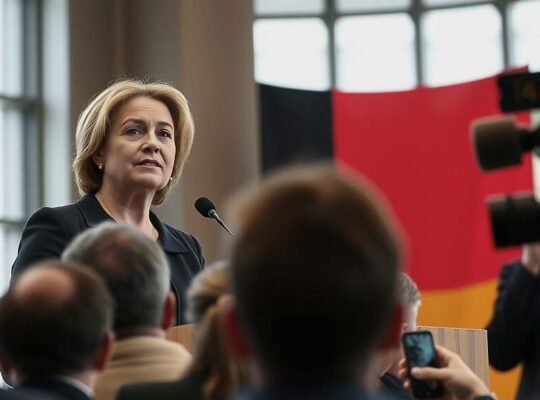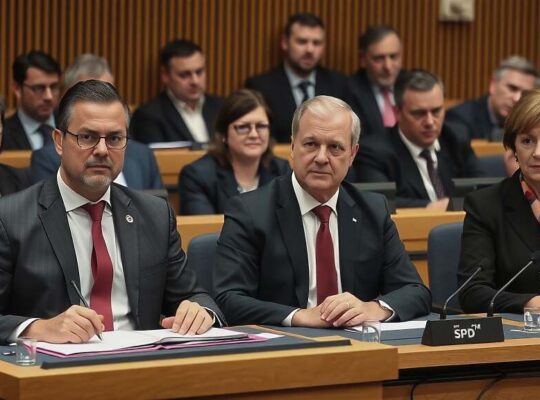
The Social Democratic Party (SPD) has signaled its intention to push for broader social welfare reforms, positioning its current pension package as a foundational step rather than a comprehensive solution, despite internal reservations within the coalition partner, the Christian Democratic Union (CDU). SPD parliamentary group deputy leader, Dagmar Schmidt, emphasized this ambition in statements to the Funke-Mediengruppe, underscoring the party’s perspective that significant long-term adjustments to both the pension system and the wider social state are urgently needed.
The pension package, currently under scrutiny and contention within the CDU, is being framed by the SPD as merely a starting point. Schmidt explicitly stated that the accompanying task list for the independent pension commission will be extensive, reflecting the party’s belief that deeper, more transformative changes are inevitable.
Beyond pensions, Schmidt advocated for additional policy decisions from the black-red coalition government in the realm of social policy. A key area of concern highlighted was the substantial expenditure within healthcare and long-term care, arguing that despite considerable investment, public perception indicates a lack of improved effectiveness. She specifically called for continuation of structural reforms initiated in the previous legislative period, framing them as essential to prioritize patient well-being and overall system efficiency.
This assertive stance from the SPD signals a potential for political friction within the coalition. While the current pension debate focuses on immediate fiscal implications, the SPD’s broader vision hints at a more fundamental restructuring of Germany’s social safety net and suggests a willingness to challenge the CDU’s priorities in the process. The success of this strategy will depend on navigating the delicate balance between coalition unity and the pursuit of the SPD’s ambitious social agenda.