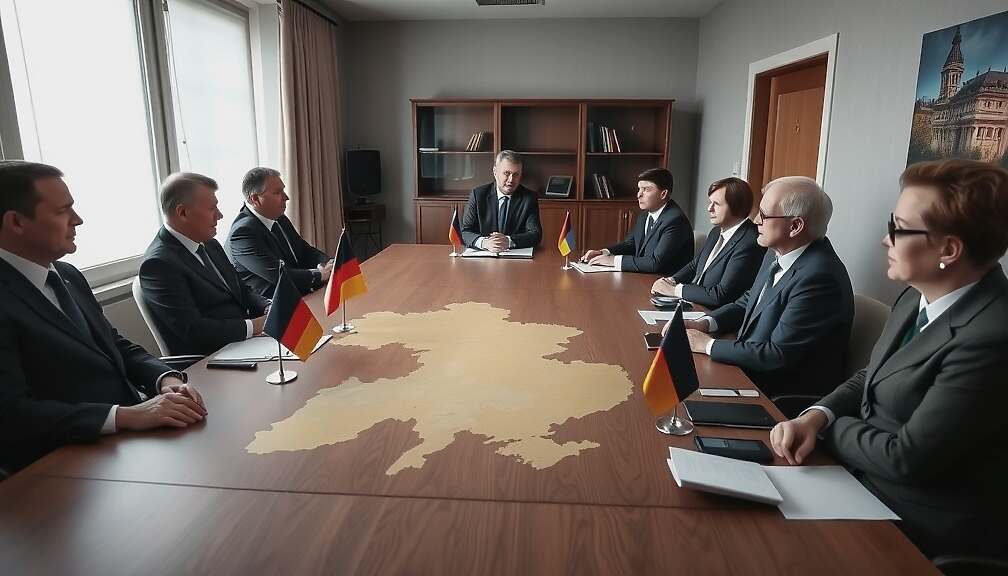
In light of talks about the future of the Ukraine conflict and the dramatic consequences of outages in electricity and heating, SPD politicians are exploring the possibility of direct discussions between Chancellor Friedrich Merz (CDU) and Russia.
“We see that little progress is being made in the talks to end the Ukraine war, and that as Europeans we are not at the table” said Adis Ahmetovic, the SPD’s foreign‑policy spokesman, in an interview with Süddeutsche Zeitung (Wednesday edition). “As things stand, it cannot continue”.
Ahmetovic stressed the need for new approaches, including clarifying at what level and by whom diplomatic contact with Russia should be pursued. He urged the government to work with European states and alliance partners to develop a strategy that would secure a steady seat at the negotiation table.
He also criticized the heavy reliance on U.S. negotiators, especially during a period when the U.S. government is treating Europe in a manner reminiscent of the Greenland issue. “Leaving the conduct of the negotiations to two U.S. real‑estate developers, Steve Witkoff and Jared Kushner, fills me with substantial skepticism”.
The idea of engaging President Vladimir Putin directly was echoed by French President Emmanuel Macron and Italian Prime Minister Giorgia Meloni, who said that the previous approaches had stalled. “I believe the moment has come for Europe to talk to Russia” Meloni told reporters in Rome two weeks ago.
Long‑time SPD faction leader Rolf Mützenich also calls for an attempt at direct dialogue. He doubted whether U.S. negotiators would take European interests into account, citing recent months’ events. “Some humiliations by Trump and his administration could have been endured better if we had put European independence at the center of our thinking from the start” he said.
Merz has not yet held a phone call with the Russian president. When asked whether Merz had attempted to arrange such a call but was rebuffed by the Kremlin-as some coalition members claim-Bundespräsidialevelers responded that the government does not comment on confidential international discussions. That was the extent of the answer, leaving the veracity of the claim unconfirmed. The spokesperson also referred to a statement by the deputy government spokesman in December, who could not confirm any intention of the chancellor to speak with Putin.