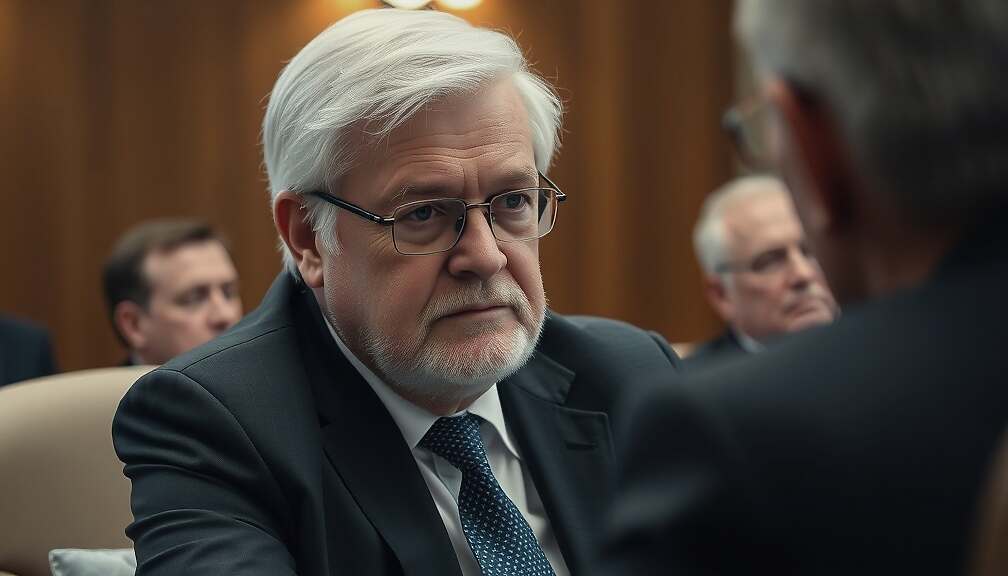
Bundespräsident Frank-Walter Steinmeier champions the selection of a political professional for his successor, citing the difficulties encountered during the government formation process in 2017. At that time, Steinmeier, in his role as Federal President, intervened to prevent a snap election because no coalition could be formed. He summoned all political parties to Bellevue Palace and urged them to fulfill their responsibilities following the election.
Looking ahead, Steinmeier expects politics to become increasingly complicated. Speaking to ARD, he stated, “I fear that similarly difficult government formations will face us in the future.” For this reason, he supports electing someone who has “contact and avenues for dialogue within the parties to help overcome such crises during government formation.”
Steinmeier also anticipates that a woman will likely be elected as his successor at the head of state. His term ends next year. Public debate surrounding the successor also centers on whether the replacement should come from one of the established parties or whether someone without close ties to the political establishment, like Joachim Gauck in 2012, should be elected again.
Turning to the war in Iran, Steinmeier welcomes the end of the conflict and hopes for an agreement between the United States and Iran. However, he insisted the war was completely unnecessary. As a former Foreign Minister, Steinmeier had been involved in negotiating the 2015 Iran deal. He described it as a “good and detailed arrangement,” regretting that President Trump terminated it during his first term. According to Steinmeier, the 2015 agreement contained everything needed that people are now struggling to piece together. His view is that abandoning the pact led to a renewed escalation, causing Iran to strengthen its support for its proxies in Hamas and Hezbollah. He concluded, “All of this could perhaps have been avoided if the 2015 treaty had remained in force.” Regarding any current deal, Steinmeier noted that it is not even certain how much it commits Iran to not building nuclear weapons. He acknowledged the frustration involved, stating, “One goes mad in this situation. If reason had prevailed, much of this would have been avoidable.”
Furthermore, Steinmeier had previously drawn up and organized the 2010 reform agenda while serving as the Minister of the Federal Chancellery under Chancellor Gerhard Schröder. He remarked, “Germans love the strong rhetoric-but not the upheaval.” He observed that discussions often focus only on how things have negatively changed since the reform. Therefore, he believes it is crucial that “justice prevails-that everyone contributes.” Steinmeier also emphasized that the starting conditions for reforms today are far more difficult, given economic stagnation and an uncertain global political environment marked by crises and wars. Yet, he stressed that the welfare state can only remain affordable “if the economy functions and supports enough workers to contribute to the financing of this social state.” He expects the government to pass the essential steps for implementing these reforms before the summer recess.