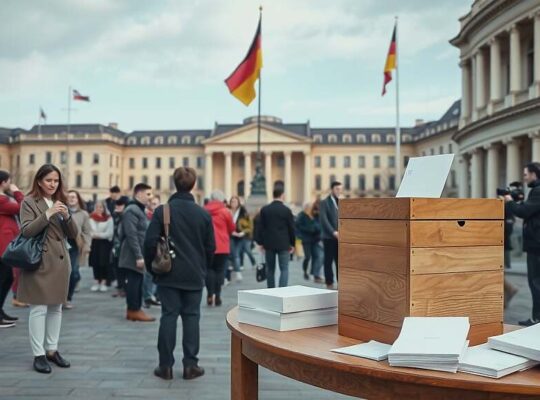
The Neujahrsempfang (New Year’s Reception) at Bellevue Palace on Friday saw President Frank-Walter Steinmeier use the occasion to champion the vital role of citizen engagement, while implicitly addressing growing concerns surrounding national security and societal resilience. Addressing a gathering including emergency responders – notably those who coordinated the response to the recent Berlin power grid attack – Steinmeier framed the new year as a period ripe for positive change and underscored the responsibility citizens bear in actively contributing to a functioning society.
While outwardly praising the dedication of the emergency services and highlighting their “lifesaving” contribution to both people and democracy, Steinmeier’s remarks carried a more pointed political undercurrent. He explicitly called for increased national effort towards safeguarding critical infrastructure from deliberate attacks and natural disasters, a clear acknowledgment of vulnerabilities exposed by recent events. This statement, coming amidst rising geopolitical tensions and concerns regarding cyber security, signals a potential shift in government priorities towards enhanced preventative measures.
Beyond immediate security concerns, Steinmeier also touched upon a longer-term demographic challenge. Recognizing the dwindling pool of individuals willing to undertake voluntary roles within an aging population, he urged a revitalization and expansion of the volunteer sector. This plea, while laudable, also hints at a broader societal issue – a potential decline in civic duty and a reliance on state-provided services rather than community-led initiatives.
Critics will likely interpret Steinmeier’s address as a coded response to the increasing polarization and anxieties impacting German society. While expressing optimism, the President subtly acknowledged the fragility of the established order, emphasizing the importance of citizen commitment as a bulwark against potential instability. The success of his appeal for continued volunteerism hinges on addressing the underlying factors contributing to decreased civic engagement, including concerns about economic security and the perceived disconnect between citizens and political institutions – issues which remain largely unaddressed by current policy frameworks. Whether this call to action will translate into tangible support for volunteer organizations and a renewed sense of civic responsibility remains to be seen.