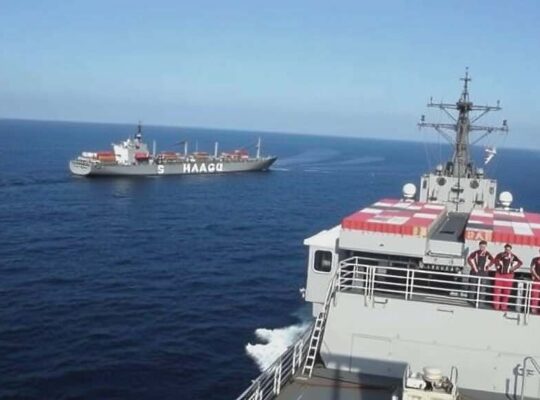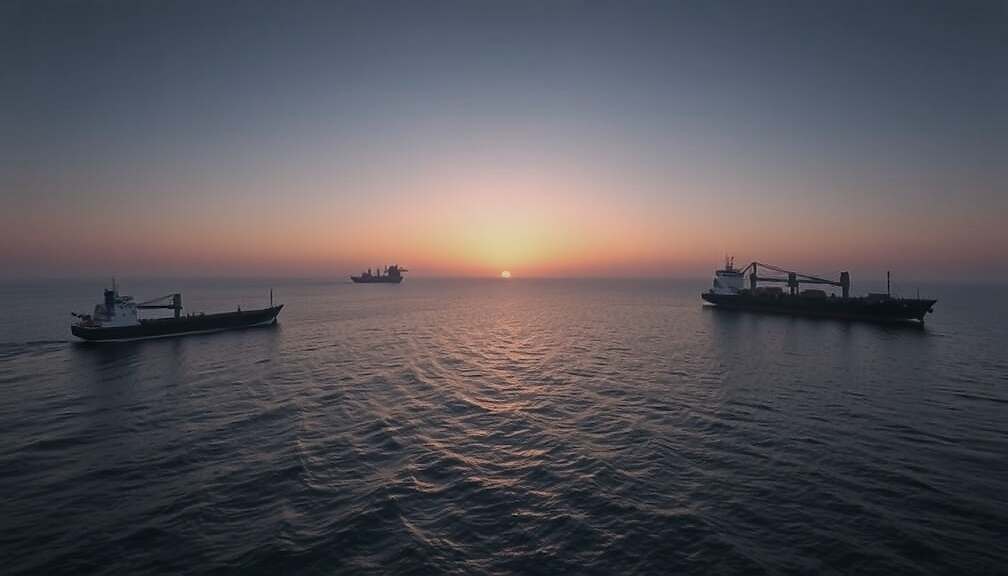
The blockage of shipping lanes in the Strait of Hormuz has an indirect impact on the EU’s trade flows via disrupted global supply chains, even though the direct lack of oil, gas, and other basic commodities deliveries is limited. This was the finding of a Thursday analysis conducted by the Ifo Institute together with Econpol Europe.
Lisandra Flach, head of the Ifo Center for International Trade, explained that imports from Iran and its neighboring countries that arrive in Europe through the Strait of Hormuz account for only a small share of all EU imports. She added, however, that when looking exclusively at oil and gas shipments the picture changes: these commodities create far greater risks. “Risks also arise through indirect effects on global supply chains” she said.
According to the calculation, imports from Iran and bordering states that travel through the Strait represent roughly two per cent of total non‑EU imports into the EU. For crude oil and liquefied natural gas the shares are considerably higher, at 6.2 % and 8.7 % respectively.
In addition to potential supply bottlenecks caused by a blockage, Flach warned of indirect dangers. “A blockage of the Strait of Hormuz could significantly limit oil exports from the Gulf states situated west of the strait. Even though direct consequences for Europe would be modest, the indirect effects – such as higher oil prices and disruptions to supply chains – pose a greater risk to the region”.